
TL;DR: For storm damage in Thonotosassa, FL, the order matters: call 911 or the utility first for downed lines or a gas smell, get a tarp or board-up on any open roof or broken window within hours to stop further damage, start water extraction within 24-48 hours to head off mold, and call your insurance company after mitigation begins, not before. DRYCOR RESTORE handles the tarping, extraction, and insurance documentation at (813) 829-1091.
If a storm just rolled through Thonotosassa and you’ve got a tree limb through the roof, water coming in around a window, or a line down in the yard, you don’t have time to figure out which number to dial first. The order you make these calls in actually changes how fast the damage stops and how smoothly your insurance claim goes. Here’s the decision tree, in the sequence it needs to happen.
Is there a downed power line or a gas smell? Call 911 and the utility first.
A downed line or a gas odor is a life-safety call, not a restoration call: dial 911 immediately, then contact the utility serving your address (Tampa Electric, known locally as TECO, serves most of Thonotosassa) to report the outage or hazard.
Stay at least 30 feet back from any downed line and assume every line is live, even if it looks dead or the power is out at your house. If you smell gas, don’t flip any switches, light anything, or start a generator near the house; get everyone outside and call from a safe distance. Hillsborough County’s emergency management office also tracks storm-related hazards countywide and is worth a call if you’re unsure which agency handles a specific hazard on your street.
Once the line is confirmed down, reported, or the hazard is cleared, move to the next step: what’s actually open on your house.
Is the roof open or a window broken? Get it covered within hours, not days.
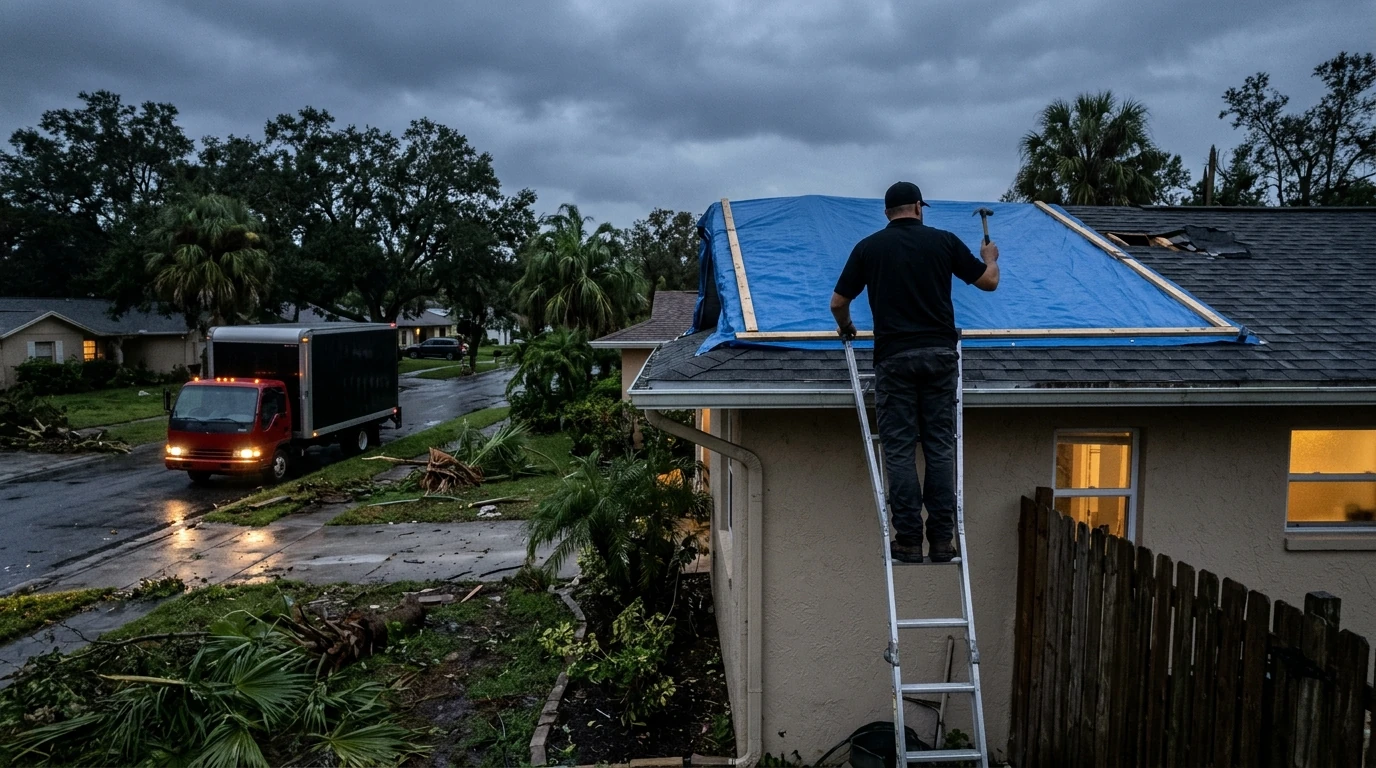
A roof open to the sky or a broken window needs emergency tarping or board-up the same day, because every additional hour of exposure adds more water, more mold risk, and more repair cost. This is also the step most homeowners skip or delay, and it’s the one insurers scrutinize hardest.
A licensed restoration crew carries tarps, plywood, fasteners, and the ladder safety gear to do this correctly on a storm-damaged roof, which is different from a DIY tarp job that blows off in the next gust. DRYCOR RESTORE’s board-up and tarping crew secures openings, photographs the damage before and after, and documents the work for the claim file. That documentation matters because most homeowners policies require you to take reasonable steps to prevent further damage; skip the tarp and an adjuster can argue later damage wasn’t storm-caused.
If water already got past the opening before you could seal it, you’re now on the clock for extraction.
Is water already inside? Extraction needs to start within 24-48 hours.
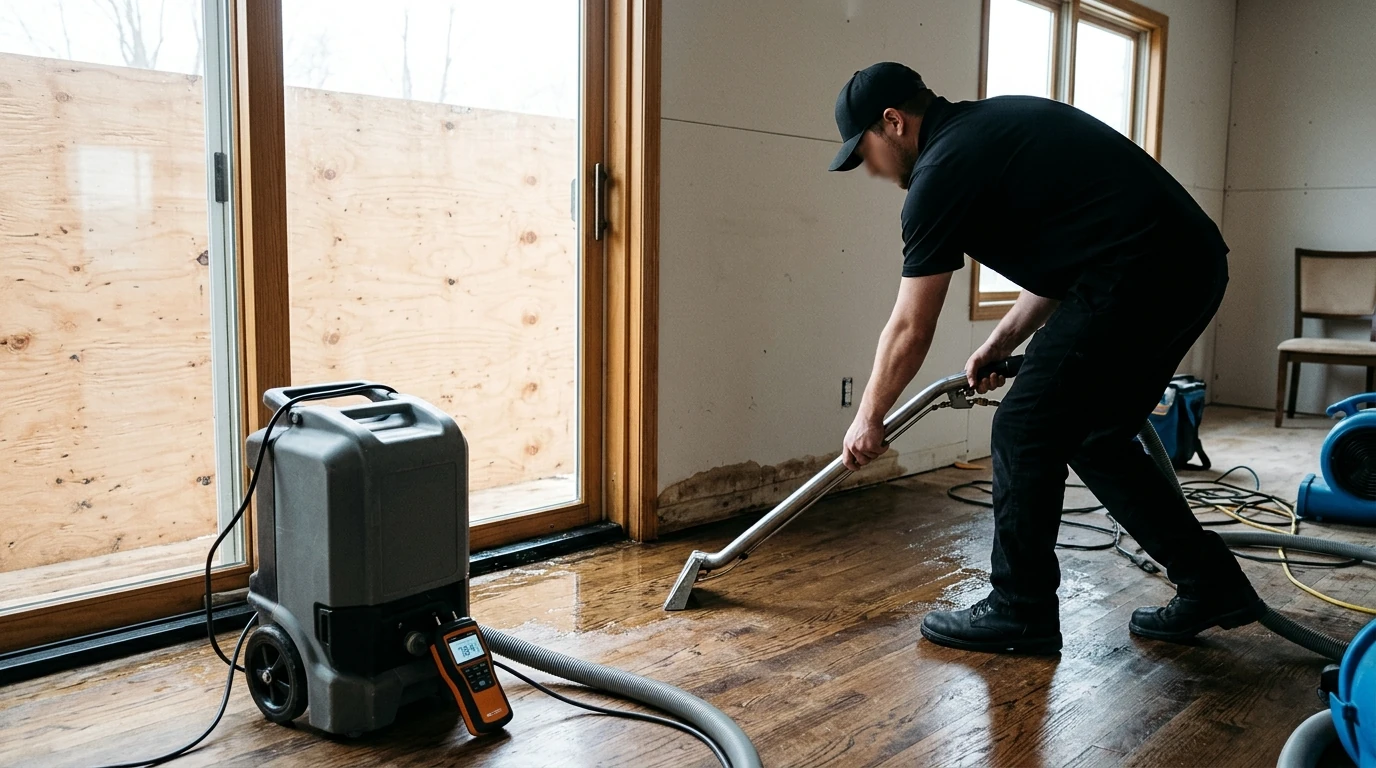
Standing or trapped water inside the house needs professional extraction within 24 to 48 hours, because wet drywall and framing can start growing mold in that same window under the Institute of Inspection, Cleaning and Restoration Certification’s guidance. Waiting a few extra days to “see if it dries on its own” is the single most common mistake that turns a wind-damage claim into a mold claim.
Whether the water came from a roof breach, a blown-in window, or wind-driven rain that worked past the flashing, it needs to be pulled out with extraction equipment and the structure dried to a measured standard, not just mopped and fans turned on. Emergency water removal crews use truck-mounted extractors and commercial dehumidifiers, and dry the structure to the moisture readings the IICRC S500 standard calls for, with daily readings logged for the insurance file. A full walk-through of what that process looks like day by day is covered in our hurricane storm damage repair guide.
Once the bleeding has stopped, meaning the hazard is handled, the opening is covered, and water is coming out, it’s time to call the insurance company.
When do I call my insurance company, and what do I tell them?
Call your insurer after mitigation has started, with photos and a description of what’s been done, rather than waiting for their inspection before you tarp or extract. Most policies require you to prevent further damage; acting first and documenting it protects the claim instead of jeopardizing it.
When you call, have the date and time of the storm, photos of the damage before any tarping, and the name of the company doing the mitigation work ready to give the adjuster. Keep every receipt and every before-and-after photo. If the damage involves wind-driven rain that entered through a storm-created opening, that’s typically treated differently under a standard homeowners policy than rising floodwater or storm surge, which generally require a separate flood policy; the Insurance Information Institute’s guide to disaster coverage breaks down that distinction, and FloodSmart.gov covers how flood insurance works separately from a homeowners policy. Check your specific policy language, since coverage varies by insurer.
If you’re still working through what the claims process actually looks like step by step, our guide on storm damage restoration costs and what insurance pays walks through typical scope items adjusters look for.
What happens when you call a restoration crew?
The first call is a short conversation: your address, what’s damaged, whether water is actively entering, and whether anyone is in immediate danger. From there a crew is dispatched to assess the opening, tarp or board it up, and begin extraction if water already got inside, photographing every step for the insurance file.
Because hours matter more than anything else in storm response, having one company handle the tarping, the extraction, and the documentation together, instead of juggling three separate vendors, is usually what keeps the claim and the repair timeline moving. DRYCOR RESTORE is an IICRC Certified Firm that has worked as a managed repair preferred vendor for insurance carriers across Florida since 2005, which means the documentation is already built around what adjusters expect to see.
If you’re staring at a hole in the roof right now, the safety checks come first, the tarp comes next, and the paperwork comes after. Schedule a storm damage assessment once the immediate hazards are handled.
About DRYCOR RESTORE
DRYCOR RESTORE is an IICRC Certified Firm serving Thonotosassa, FL and the greater Tampa Bay area since 2005, licensed under CBC1253966. The company holds IICRC Water Restoration Technician certification and operates as a managed repair preferred vendor for 34 insurance carriers in Florida, handling storm damage restoration, emergency board-up and tarping, water extraction, and the fire, mold, and reconstruction services that follow major weather events across the region.
Need help now? Call DRYCOR RESTORE at (813) 829-1091.
Video Transcript
A storm just tore through Thonotosassa, Florida, and you’ve got a tree limb through the roof or water pouring in through a window. Who do you call first? If you see a downed power line or smell gas, call 911 immediately, then contact your utility company to report the hazard. Stay at least thirty feet from any downed line, and assume every single one is live, even if your power is already out. Is your roof open or a window broken? That kind of damage needs tarping or board-up within hours, not days, to stop it from getting worse. A licensed contractor carries tarps, plywood, and the right safety gear, then photographs everything to support your insurance claim. Water already inside? Extraction needs to start within twenty-four to forty-eight hours, because mold can begin growing that fast. Your contractor uses truck-mounted extractors and commercial dehumidifiers, drying the structure to the moisture levels insurers expect to see. Call your insurance company after mitigation has already started, with photos and a description of the work being done. Have the storm’s date and time, before photos, and your contractor’s name ready when you talk to the adjuster. Call DRYCOR RESTORE at (813) 829-1091 to schedule an assessment.