
TL;DR: Storm damage restoration in Thonotosassa, FL typically costs anywhere from $1,500 for emergency tarping and water extraction on a single room to $35,000 or more for a full rebuild after wind, water, and debris damage. The biggest cost variable isn’t the repair itself, it’s whether your homeowners policy’s separate hurricane deductible applies, since that’s a percentage of your dwelling coverage rather than a flat dollar amount.
If a tree limb just put a hole in your roof or wind-driven rain soaked your living room during the last system that rolled through Hillsborough County, you’re probably staring at two numbers right now: what the repair will cost, and what your insurance company will actually pay. Those two numbers aren’t always close, especially in Florida, where a named storm triggers a different deductible than a regular afternoon thunderstorm does. Here’s how the bill breaks down by phase, and how the hurricane deductible changes what you owe.
How much does storm damage restoration cost in Thonotosassa, FL?
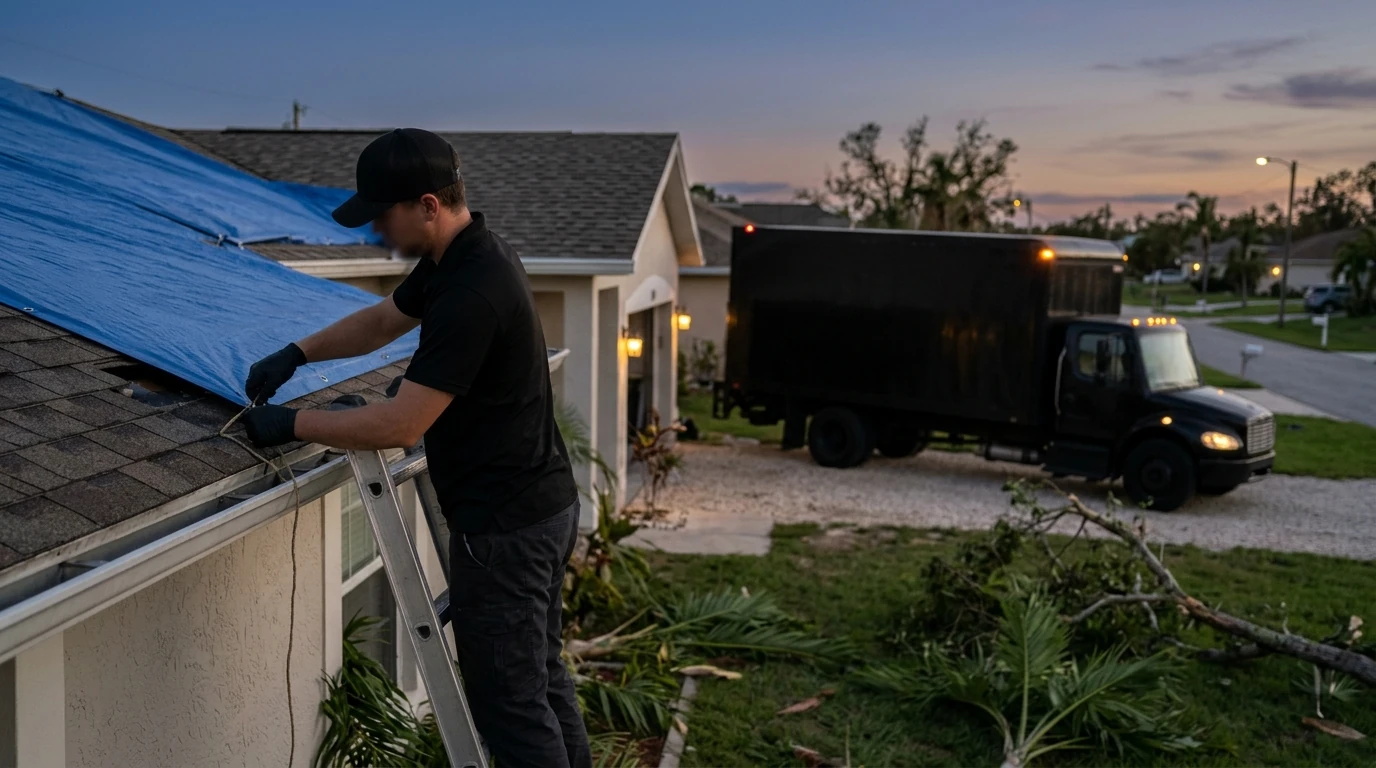
Most storm damage jobs in this area fall between $1,500 and $35,000, with the total driven by how many phases of work are involved, not just square footage. A single tarped roof section and one room of water extraction might land under $3,000. A home with a compromised roof, soaked drywall and flooring across multiple rooms, and a partial rebuild can climb past $20,000 before insurance applies.
The range is wide because “storm damage” covers several distinct jobs that often happen in sequence: securing the structure, removing water, drying it out, and then rebuilding what came out. A quote for one phase isn’t a quote for the whole job.
What drives the cost of storm damage restoration?
The cost moves with four things: how much water got in, how long it sat before extraction started, how much structural material has to come out, and how much of the home needs to be rebuilt versus just dried. A roof breach caught and tarped within hours costs far less to repair than one that leaked for two days before anyone noticed.
Florida’s humidity accelerates the clock. Wet drywall and insulation left untreated can start supporting mold growth within 24 to 48 hours, according to the EPA, which usually means more material gets cut out rather than dried in place if the response is delayed.
Here’s a typical breakdown by phase:
| Phase | Typical cost range |
|---|---|
| Emergency roof tarp (single section) | $400 - $1,200 |
| Window or door board-up (per opening) | $150 - $450 |
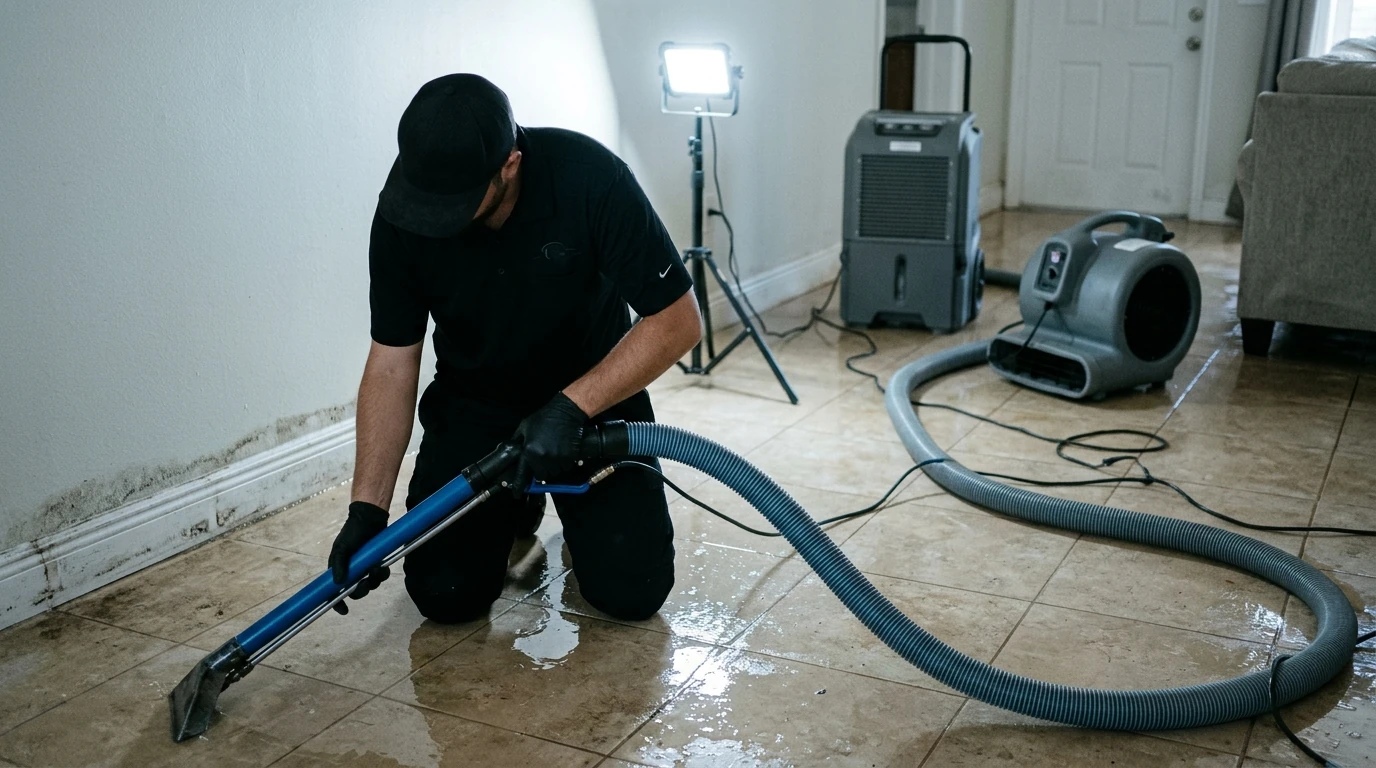
| Water extraction & structural drying (per affected room) | $1,500 - $4,000 |
| Storm debris removal (downed limbs, fencing, roofing material) | $500 - $3,000 |
| Interior reconstruction (drywall, insulation, flooring) | $3,000 - $15,000+ |
| Full storm damage restoration (moderate whole-home loss) | $8,000 - $35,000+ |
These are typical industry ranges for this region, not a quote. Every loss is different, and a written scope of work before any work begins is the only way to know your actual number.
How does the Florida hurricane deductible work?
Florida requires a separate hurricane deductible on most homeowners policies, and it only applies to damage caused by a named storm, meaning a system the National Hurricane Center has named and issued a watch or warning for. That deductible is a percentage, usually 2%, 5%, or 10% of your Coverage A (dwelling) limit, not a flat dollar figure like your regular deductible.
On a home insured for $300,000, a 2% hurricane deductible is $6,000 out of pocket before coverage kicks in. A regular thunderstorm, the kind that isn’t attached to a named system, triggers your standard all-other-peril deductible instead, which is usually a flat amount like $1,000 or $2,500. That’s a meaningful difference on the same roof leak, depending on which storm caused it.
Your declarations page will state the hurricane deductible percentage and whether it’s a seasonal or per-occurrence deductible. The Florida Office of Insurance Regulation’s consumer resources walk through how that percentage is calculated and what triggers it.
What does insurance typically cover after storm damage?
Most homeowners policies cover sudden wind and wind-driven rain damage, meaning water that entered through a storm-created opening like a torn roof or broken window. What’s usually excluded or capped is flood water, meaning rising water from outside the structure, which requires a separate flood policy through the National Flood Insurance Program or a private flood carrier.
Documentation matters more than most homeowners expect. Photos of the damage before any cleanup, the date and approximate time the damage occurred, and receipts for emergency mitigation (tarping, board-up) all support the claim. Florida’s Department of Financial Services keeps consumer guidance on the claims process, including your right to request a copy of your adjuster’s estimate.
For the deeper mechanics of how a homeowners claim is typically handled after storm damage, see our hurricane and storm damage repair guide.
What happens during the restoration process?
A typical storm damage job in the Thonotosassa area moves through four phases:
- Emergency stabilization. Tarping the roof or boarding windows and doors to stop further water and weather intrusion, usually within hours of the call.
- Water extraction. Standing water is pumped and extracted, and affected contents are moved or inventoried.
- Structural drying. Air movers and dehumidifiers are set to dry framing, subfloor, and remaining drywall to the moisture targets outlined in the IICRC S500 standard, the industry benchmark for water damage drying.
- Reconstruction. Removed drywall, insulation, flooring, and roofing are rebuilt to match the home’s pre-loss condition.
Not every job needs all four phases. A roof leak caught early might only need tarping and drying; a flooded living room after wind-driven rain might skip tarping and go straight to extraction and rebuild.
Who should you call first after storm damage?
Call a restoration contractor who handles emergency board-up, water extraction, and reconstruction under one scope, rather than coordinating separate roofers, plumbers, and contractors yourself while the clock on mold growth is running. DRYCOR RESTORE, an IICRC Certified Firm based in Thonotosassa, is a managed repair preferred vendor for 34 insurance carriers operating in Florida, which means the documentation from the first call forward is built to match what adjusters expect to see.
Getting a written scope before work begins protects you on both ends: it gives you a real number to compare against your deductible, and it gives your adjuster a clear basis for the claim.
If you’re facing active storm damage right now, request a storm damage assessment before securing a roofer or contractor independently. A single coordinated scope, covering tarping, water removal, and reconstruction, tends to move faster through insurance than three separate invoices.
About DRYCOR RESTORE
DRYCOR RESTORE is an IICRC Certified Firm based in Thonotosassa, FL (license CBC1253966), serving Tampa Bay and the surrounding region since 2005. This post was prepared with input from Robert Showalter. The company’s crews handle storm damage restoration, emergency board-up and tarping, water damage restoration, and reconstruction across Hillsborough and neighboring counties, operating 24/7 for emergency response.
Need help now? Call DRYCOR RESTORE at (813) 829-1091.