
TL;DR: Hurricane storm damage repair in Thonotosassa, FL starts with stopping further water intrusion (tarping, board-up), then documenting damage for insurance before any repairs begin. Florida homeowners policies typically carry a separate hurricane deductible of 2% to 5% of dwelling coverage, paid before the insurer covers the rest. Most roof and water-intrusion repairs take 1 to 3 weeks once a scope is approved; structural rebuilds take longer.
If your roof lost shingles or a soffit peeled back during the last storm system and rain is now getting into the attic, you’re not alone this time of year. Thonotosassa sits close to the Hillsborough River floodplain and near Lake Thonotosassa, and homes in this area see both wind damage to roofing and secondary water intrusion once a storm passes. What you do in the first 24 to 48 hours determines whether this stays a contained repair or turns into a mold problem.
What Should You Do Right After Storm Damage Hits Your Home?
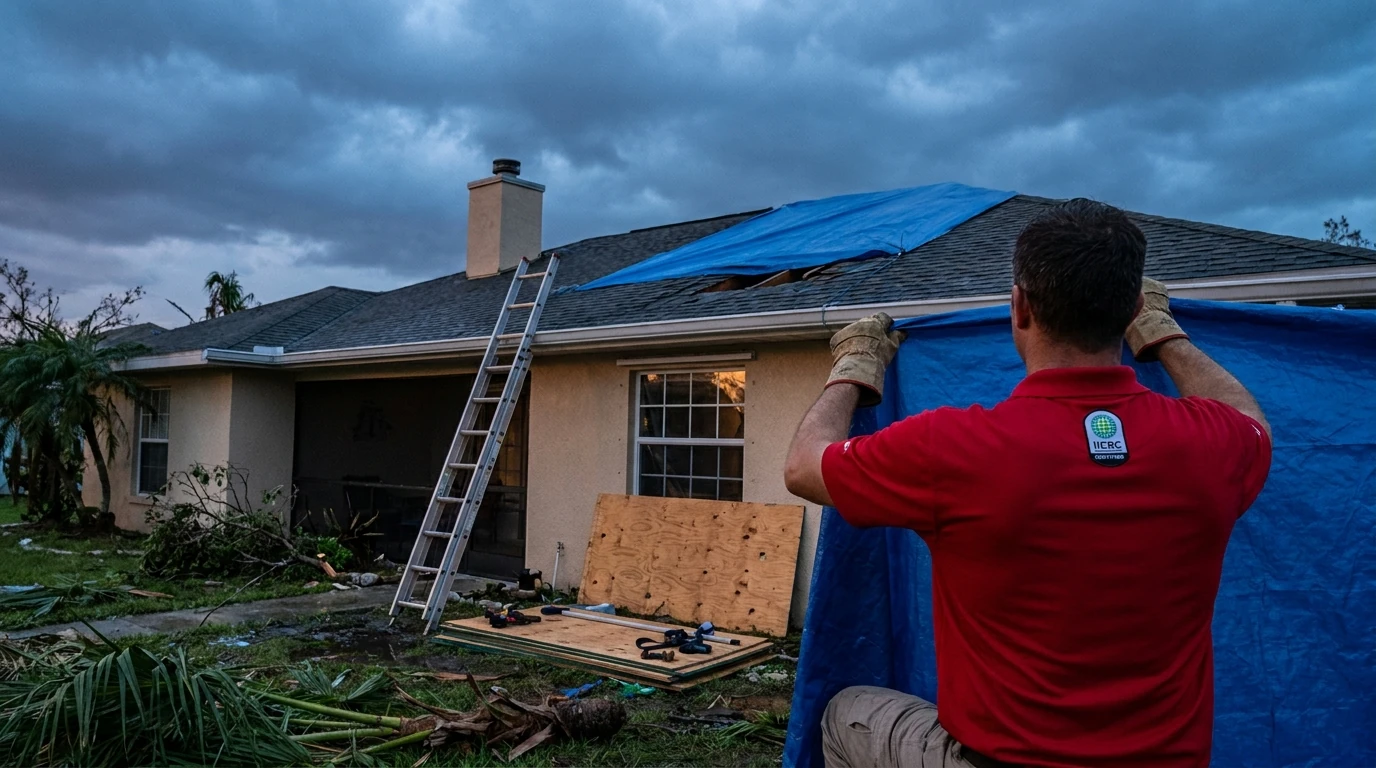
Stop active water intrusion first, then document everything before you touch anything. A tarp over an exposed roof section or plywood over a broken window buys you time without destroying evidence your insurance adjuster needs to see.
Walk the exterior only if it’s safe: no downed power lines, no standing water near outlets, no unstable tree limbs overhead. Photograph the damage from multiple angles before any tarping or board-up work covers it. Note the date and approximate time of the storm, since insurers ask for this on the claim.
Inside, move valuables and electronics away from any ceiling stains or active drips. A 5-gallon bucket under a slow leak is a reasonable stopgap, but it won’t stop moisture from spreading into insulation and drywall. If water has already soaked carpet or drywall, that clock is already running: most materials start supporting mold growth within 24 to 48 hours, per IICRC drying standards.
How Does Storm Damage Repair Actually Work, Step by Step?
Storm damage repair follows a sequence: stabilize, assess, dry, then rebuild. Skipping the drying step to rush into repairs is the most common mistake that leads to hidden mold later.
- Emergency mitigation - tarping over roof openings, board-up on broken windows or doors, and water extraction if rain got inside. This happens within hours of the call, not days.
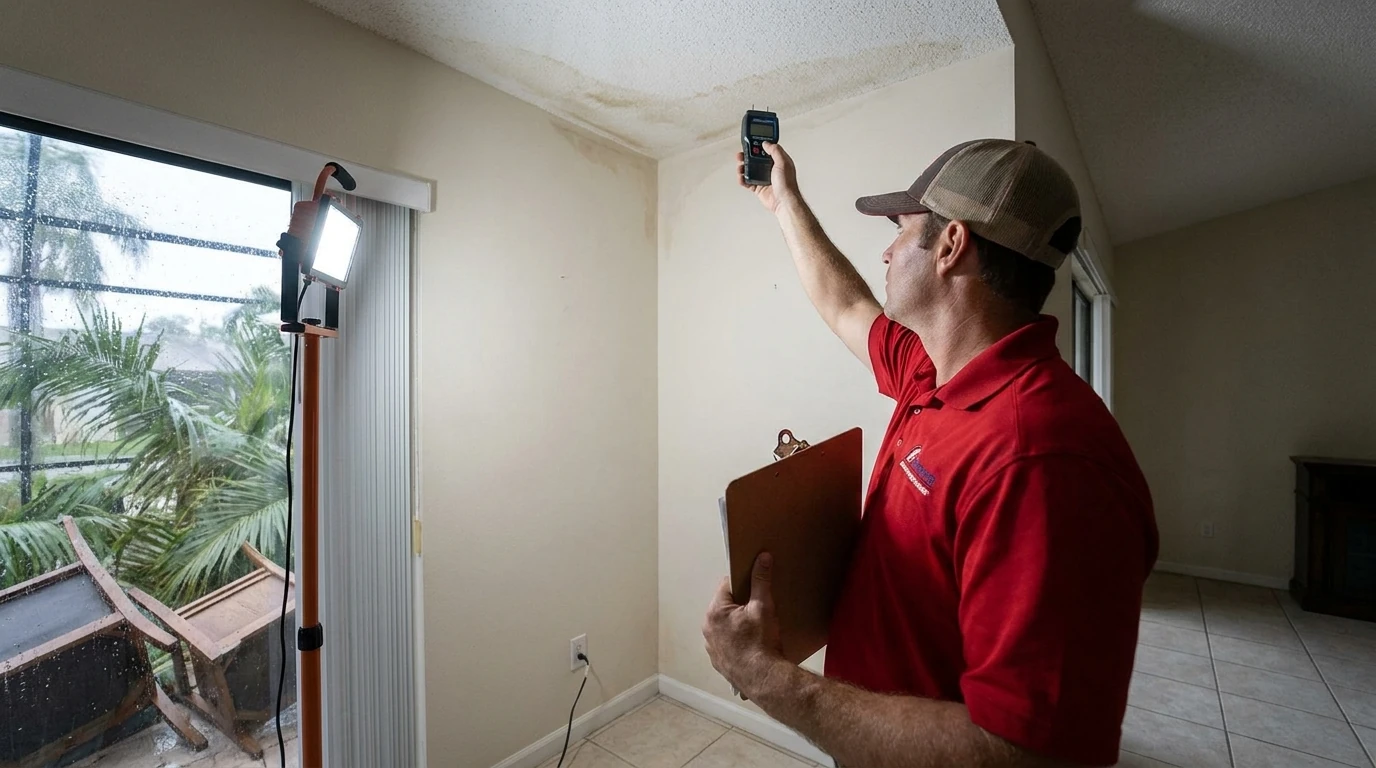
- Damage assessment - a technician documents affected materials, checks moisture levels behind walls and under flooring with a moisture meter, and writes a scope of work for the insurance adjuster.
- Structural drying - air movers and dehumidifiers run for several days if water reached subflooring, drywall, or insulation, following the IICRC S500 water damage standard.
- Reconstruction - drywall, insulation, flooring, and roofing get replaced or repaired to match the original structure, often coordinated directly with the insurance carrier’s approved scope.
For wind-driven rain that got behind siding or soffits without visible structural damage, the process can be shorter: dry out, replace affected drywall sections, repaint. For a compromised roof deck or a tree-strike, expect the reconstruction phase to take longer and likely require a permitted roofing contractor.
If you’re not sure whether what you’re dealing with is roof wind damage or rising water from a nearby low-lying area, the response is different: see what to do in the first 24 hours after water damage for the water-specific steps.
Will Homeowners Insurance Cover Hurricane Damage in Florida?
Most Florida homeowners policies cover hurricane wind damage, but with a separate hurricane deductible, typically 2% to 5% of your dwelling coverage amount, that applies instead of your regular deductible once a storm is officially named. That deductible is paid out of pocket before the insurer’s coverage kicks in.
Standing floodwater from storm surge or heavy rain overflow is usually NOT covered by a standard homeowners policy. That requires separate flood insurance through the National Flood Insurance Program, which FEMA administers. Wind-driven rain that enters through a storm-damaged roof or broken window, on the other hand, is typically treated as wind damage and covered under the standard policy, not the flood policy.
Documentation matters more than people expect. Photos of the damage before tarping, a written scope of work, and moisture readings all support the claim and reduce disputes over what the storm caused versus pre-existing wear. For a broader look at how these claims get evaluated, see does homeowners insurance cover water damage.
Who Should You Call First for Storm Damage in Thonotosassa?
Call a restoration contractor before you call a roofer for repairs, because mitigation (stopping the damage from spreading) has to happen within hours, and a good restoration crew coordinates directly with your insurance adjuster on the scope. Call DRYCOR RESTORE at (813) 829-1091 for emergency tarping, board-up, and water extraction, available 24/7 across Thonotosassa and the Tampa Bay area.
If you still have active flowing floodwater from a nearby waterway, or downed power lines, call 911 or your utility company first. Once the scene is safe, a restoration crew can document damage, tarp openings, and start drying before mold has a chance to take hold.
Get a written scope of work before any permanent repairs begin. Every storm loss is different, and a documented scope protects you if the insurance adjuster’s estimate doesn’t match what the repair actually requires.
About DRYCOR RESTORE
DRYCOR RESTORE is an IICRC Certified Firm serving Thonotosassa, FL and the surrounding Tampa Bay region since 2005, licensed under CBC1253966. The company is a Managed Repair Preferred Vendor for 34 insurance carriers in Florida and handles storm damage repair, water damage restoration, emergency board-up and tarping, and reconstruction across the area, with 24/7 emergency response.