
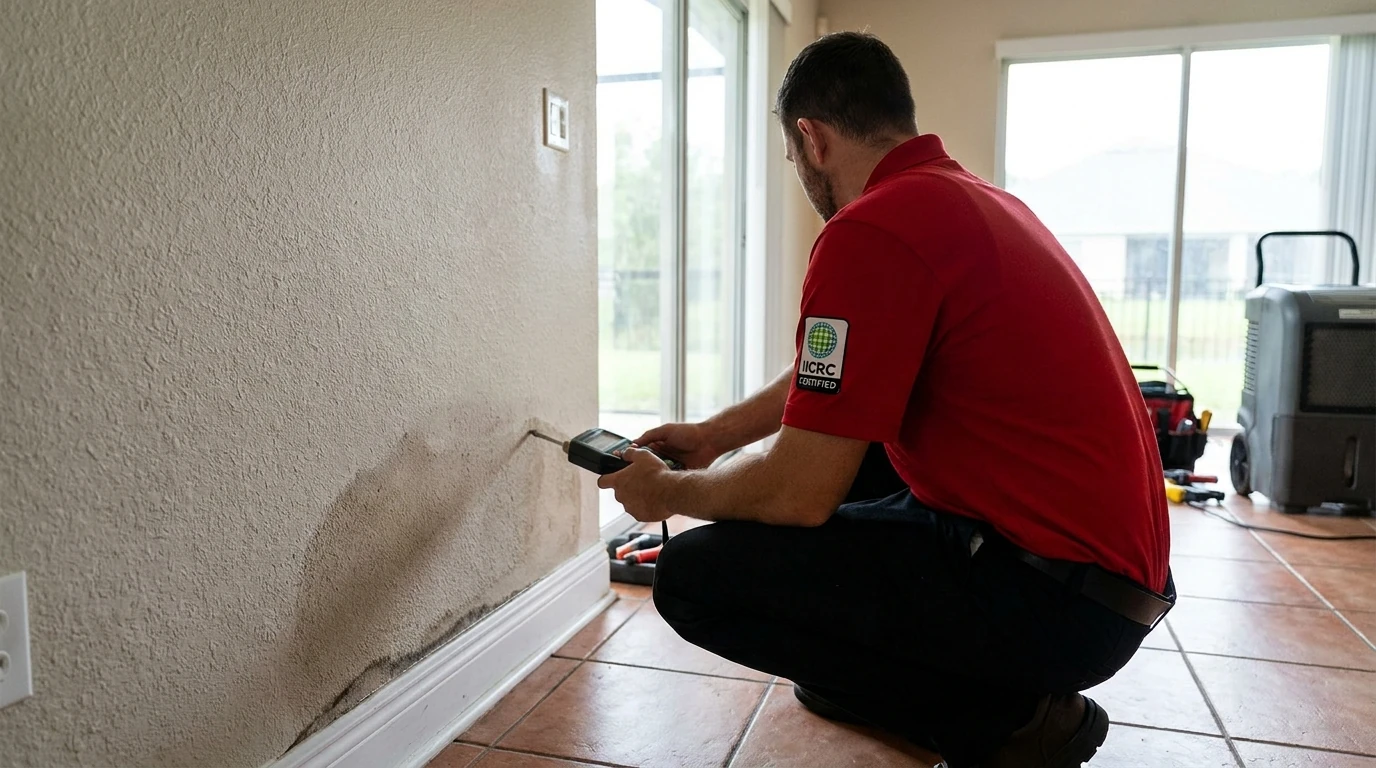
For water damage restoration in Thonotosassa, FL, call DRYCOR RESTORE at (813) 829-1091. The company runs a 24/7 emergency line, holds IICRC Certified Firm status, and is a Managed Repair Preferred Vendor for 34 insurance carriers in Florida, so the same call that gets water out of your house can also get your claim moving correctly from day one.
That’s the short version. What actually matters in the next ten minutes is figuring out whether this is a restoration call, a plumber call, or both, and what to have ready when you dial. Here’s how to sort that out fast.
When Is It a Restoration Call, and When Is It a Plumber Call?
Call a restoration company the moment you see standing water, a soaked subfloor, or a stained ceiling, because every hour that water sits is an hour it spreads into wall cavities, subfloor, and insulation where you can’t see it. Call a plumber first only if water is still actively flowing from a fixture or supply line and nobody has shut off the source yet.
In practice, most Thonotosassa calls need both, just in a specific order. If a supply line under a sink or a washing machine hose has split, shut off the water at the fixture valve or the home’s main shutoff, then call the restoration team to start extraction while a plumber schedules the actual repair. If the leak has already stopped (a water heater that failed overnight, an AC condensate line that backed up and overflowed) skip the plumber step entirely for now and go straight to extraction and drying.
Two situations change the order completely. If water is anywhere near an electrical panel, outlet, or light fixture, cut power at the breaker, or call the utility company first if you can’t reach the panel safely. If the water is sewage or backed-up from a drain line rather than clean supply water, that’s a Category 3 loss under the IICRC S500 standard, also called black water, and it calls for sewage cleanup protocols rather than standard extraction. Don’t wade into it or run a shop vac through it.
Many properties around Lake Thonotosassa and the surrounding unincorporated parts of Hillsborough County sit on slab foundations with well and septic systems, which makes groundwater intrusion and septic backups more common here than in sewer-connected neighborhoods closer to Tampa. If you’re not sure which type of water you’re dealing with, say so on the phone. A good dispatcher will ask the right questions to figure it out before a truck ever leaves the yard.
What Happens When You Call for Water Damage Restoration?
The first call is mostly information gathering: your address, what caused the water, how long it’s been standing, and whether there’s any electrical risk. That five-minute conversation determines what equipment loads onto the truck before anyone drives out.
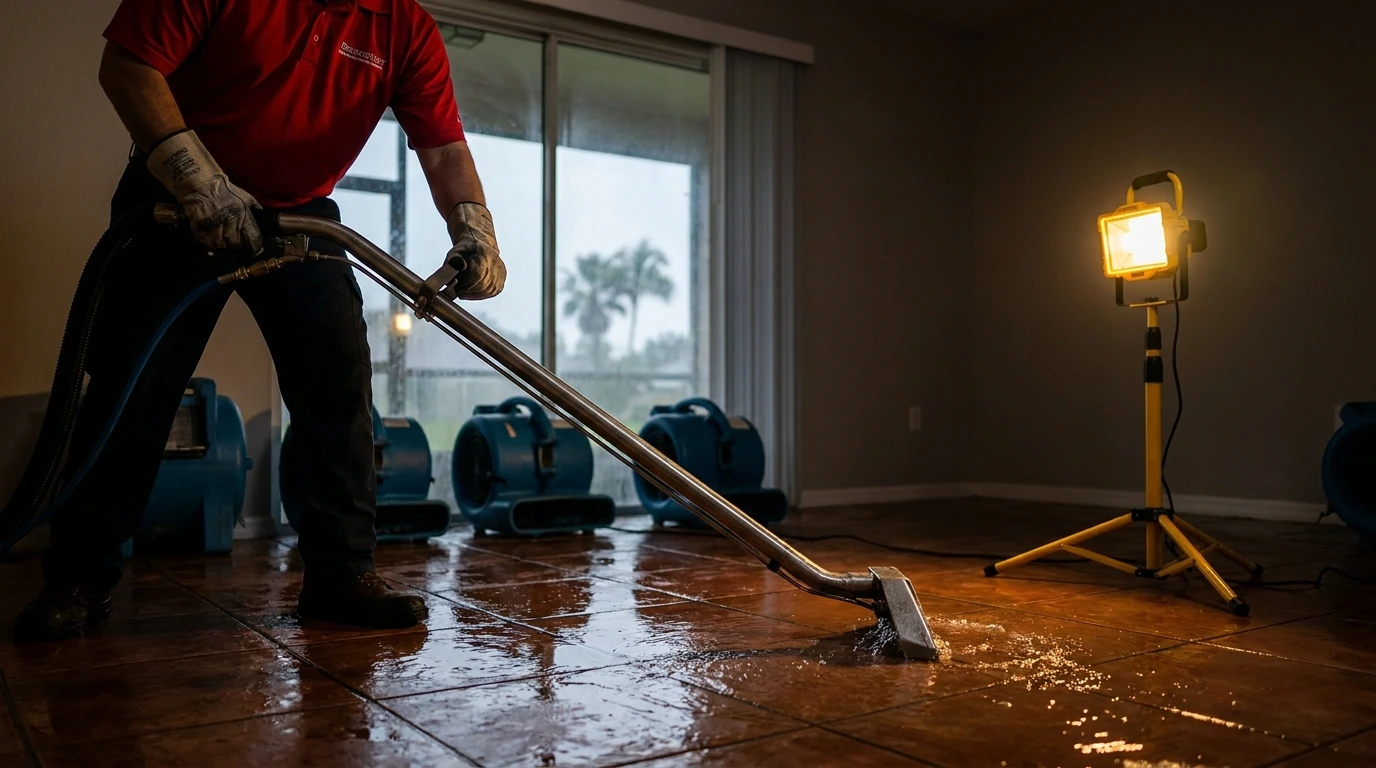
On arrival, a technician walks the property with a moisture meter and documents every affected surface before moving anything, because that documentation is what your insurance adjuster will ask for later. From there the standard sequence is extraction of standing water, placement of air movers and a dehumidifier sized to the affected square footage, and daily moisture readings until the structure hits a normal dry standard. The EPA notes mold can begin colonizing damp material within 24 to 48 hours, which is the real reason restoration crews push to start drying the same day water appears rather than waiting for a scheduled slot.
If you want a fuller walkthrough of each phase, this site’s water damage restoration process guide covers it start to finish.
Should You Call Your Insurance Company Before or After the Restoration Crew?
Call the restoration crew first, then your insurer once mitigation is underway, because most homeowner policies require you to take reasonable steps to prevent further damage and will expect that work to have already started. Waiting on a claim number before drying anything out usually just adds a day of unnecessary spread.
Having an IICRC Certified Firm on-site from the start also matters for the paperwork side. Moisture logs, photos, and equipment run-time records are exactly what adjusters want to see to approve mitigation costs without a fight. If you haven’t filed yet, our guide to what homeowners insurance actually covers for water damage is worth a read before that call.
With hurricane season still active in Florida through the end of November, it’s also worth keeping the number for a restoration company saved in your phone before you need it, the same way you’d keep a tow truck’s number on hand before a flat tire.
Water damage rarely waits for a convenient time to show up. Whether it’s a split supply line under the kitchen sink or a slow leak that finally soaked through the ceiling drywall, getting extraction started quickly is what keeps a one-room problem from becoming a whole-house one. A water damage restoration assessment is the fastest way to find out exactly what you’re dealing with.
About the Restoration Team
This Thonotosassa-based company has been in restoration since 2005 and holds IICRC Certified Firm status along with Florida contractor license CBC1253966. Crews handle water damage, flood response, burst pipes, sewage cleanup, mold remediation, fire and smoke damage, and reconstruction across Thonotosassa, Tampa, Brandon, Plant City, and the surrounding Tampa Bay area, with direct insurance coordination built into every job.