
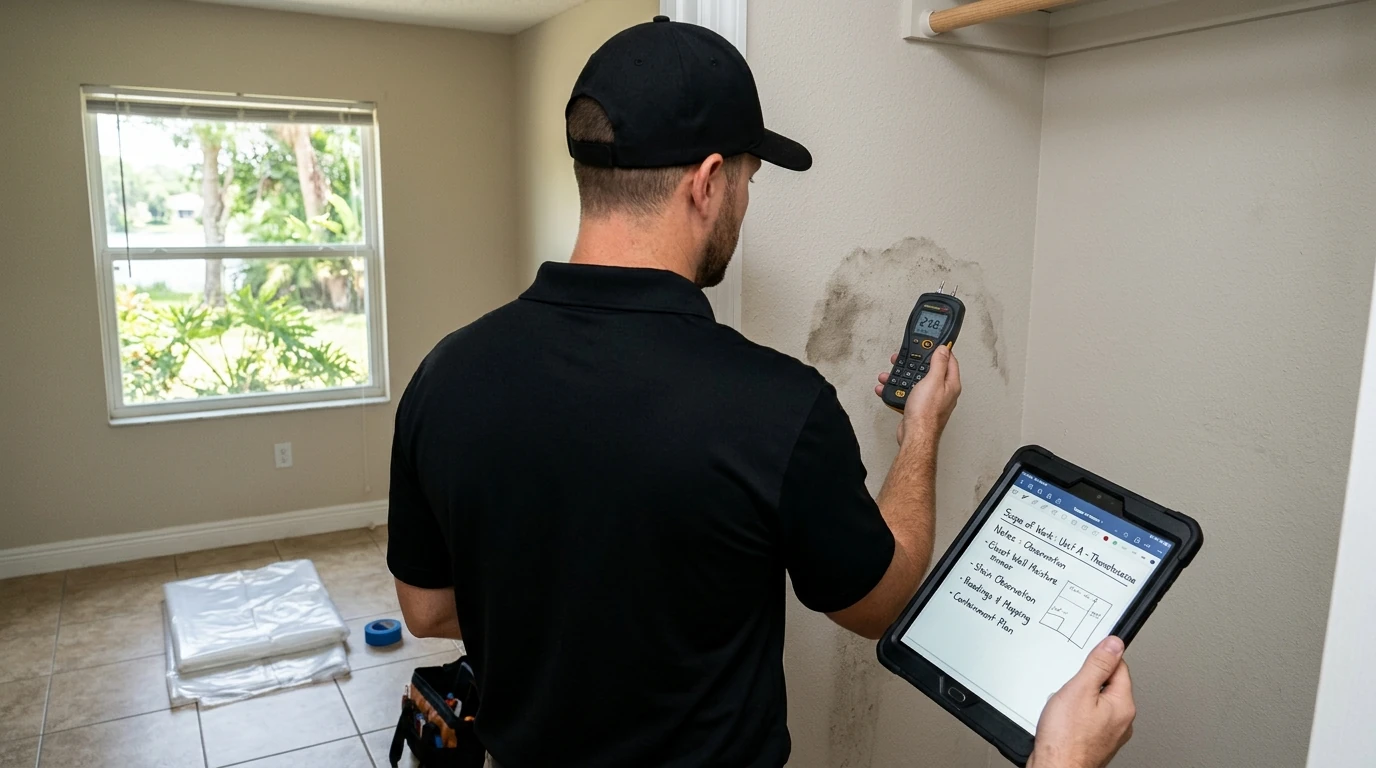
TL;DR: Mold remediation in Thonotosassa and the greater Tampa Bay area typically costs between $500 for a small, surface-level job and $15,000 or more for a whole-house remediation involving HVAC contamination and material replacement. Most homeowners dealing with a contained problem, a bathroom wall or a laundry closet, pay somewhere between $1,500 and $4,500. The final number depends on square footage, how many materials have to come out, whether the HVAC system is involved, and whether containment is required under the ANSI/IICRC S520 standard.
If you just got a mold inspection report back with a number you don’t have context for, or you noticed a dark stain creeping across a closet wall in your Thonotosassa home and you want to know what you’re in for before anyone shows up with a quote, this guide breaks down what actually moves the price. Tampa Bay’s humidity makes mold a recurring problem here, not a rare one, and the cost conversation looks different depending on whether this started with a sudden leak or months of unnoticed moisture.
How Much Does Mold Remediation Cost in Thonotosassa, FL?
Most mold remediation jobs in this area fall between $500 and $10,000, with small, contained jobs at the low end and whole-house or HVAC-involved jobs pushing past $15,000. The price is set by square footage, containment requirements, and how much building material has to be removed versus cleaned in place.
A single damp patch behind a bathroom vanity is a different job than mold that has spread through wall cavities after a slow roof leak went unnoticed for a season. Both show up as “mold remediation” on a quote, but the labor, equipment, and material removal involved are nowhere close to the same.
| Scenario | Typical cost range |
|---|---|
| Small surface mold, under 10 sq ft (bathroom tile, closet corner) | $500 - $1,500 |
| Moderate growth, 10-100 sq ft, behind drywall | $1,500 - $4,500 |
| Multiple rooms or HVAC-contaminated ductwork | $4,500 - $10,000 |
| Crawlspace, garage, or attic mold (Florida rarely has basements) | $2,000 - $7,000 |
| Whole-house remediation with reconstruction | $10,000 - $25,000+ |
| Mold inspection and clearance testing (pre and post) | $300 - $800 |
One note on the “basement” search people run: most Florida homes, including those around Thonotosassa, are built on a slab with a high water table underneath, so true basements are uncommon. The equivalent enclosed, poorly ventilated spaces here are crawlspaces, garages, and attics, and the remediation logic is the same.
What Drives the Price of Mold Remediation in Tampa Bay Humidity?
The biggest cost drivers are square footage, containment, and whether the HVAC system is contaminated, because each one adds labor hours and specialized equipment. Industry pricing for the remediation work itself often lands in the $10 to $25 per square foot range before any reconstruction, though every job is scoped individually.
Square footage and material removal. Porous materials like drywall, insulation, and carpet padding usually get removed rather than cleaned once mold has taken hold, because they hold spores in their structure. Non-porous surfaces (tile, some sealed wood, metal) can often be HEPA-vacuumed and treated in place, which costs less.
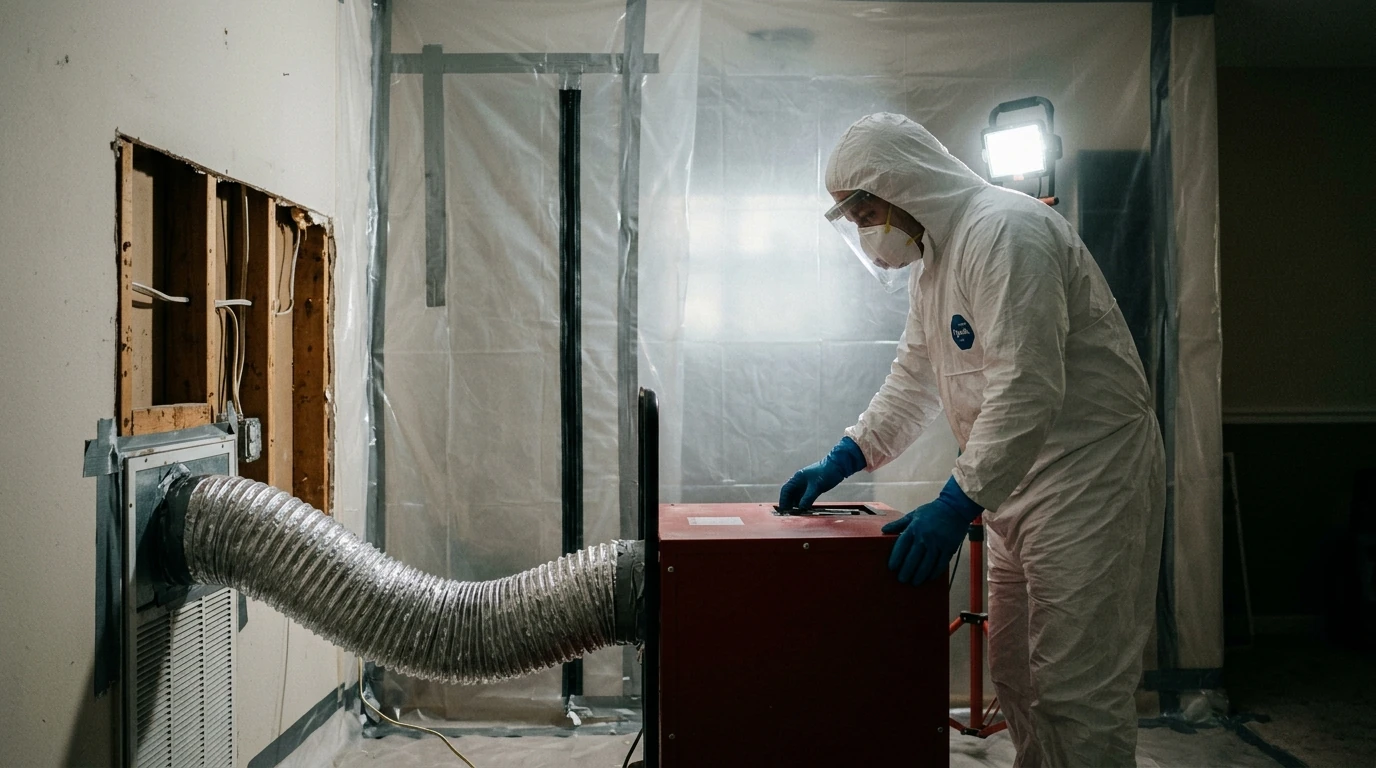
Containment. Under the ANSI/IICRC S520 standard, a remediation crew sets up physical containment, poly sheeting and negative air pressure, to stop spores from spreading to the rest of the house during the work. Larger or multi-room jobs need more containment barriers and longer setup time.
HVAC involvement. When mold has reached supply or return ductwork, the system has likely been circulating spores through the whole house. HVAC mold remediation costs more because it requires sealed access to the ductwork, specialized negative-pressure equipment, and sometimes duct replacement rather than cleaning, on top of the room-level work.
Hidden mold and testing. Mold behind a wall or under flooring often isn’t visible until a wall is opened, which is why a pre-remediation inspection matters. Our mold inspection and testing work and the guidance in our post on how to test for mold both cover why sampling before and after the work protects you from paying to “fix” a problem that was never fully scoped.
Does Homeowners Insurance Cover Mold Remediation in Florida?
It depends entirely on what caused the mold. If it followed a sudden, covered water loss, a burst pipe or a failed appliance line, mold remediation is often included as part of that water damage claim, subject to any mold-specific sub-limit written into the policy. If the mold came from a long-term leak, condensation, or humidity the homeowner didn’t address, it’s typically treated as a maintenance issue and not covered.
Most homeowners policies draw this line clearly: sudden and accidental covered losses get paid, gradual deterioration does not. The Insurance Information Institute explains this distinction in more detail, and it’s worth reading before you assume either way. Many Florida policies also carry a separate, lower mold sub-limit than the rest of the dwelling coverage, so even a covered claim may not pay the full remediation cost.
This is also where the “who pays for mold remediation” question usually gets answered: if you can trace the mold back to a specific, sudden covered event and you have documentation (photos, a plumber’s invoice, a water damage report), you have a real shot at coverage. If the trail leads back to a slow roof leak nobody caught for months, that’s usually an out-of-pocket repair. If a recent leak is part of the story, our water damage restoration team can document the source event the same way we would for a standalone water claim.
What Happens During Mold Remediation, Step by Step?
Mold remediation follows a sequence: inspect and test, contain the area, remove or treat affected materials, then verify the work with clearance testing. Skipping any one of these steps is usually why mold comes back.
- Inspection and sampling. A technician identifies the extent of growth, checks moisture levels behind suspect walls, and may pull air or surface samples for a lab.
- Containment setup. Poly sheeting and negative air machines isolate the work area so spores don’t spread to clean parts of the home during demolition.
- Material removal. Affected drywall, insulation, and other porous materials are bagged and removed; salvageable surfaces are HEPA-vacuumed and treated with an EPA-registered antimicrobial.
- Drying and source repair. The moisture source, whether it’s a leak, poor ventilation, or AC condensation, has to be fixed, or the mold returns. This is where our 7 signs of hidden mold post is worth a read if you’re not sure what prompted the growth in the first place.
- Clearance testing. A post-remediation air or surface sample confirms spore counts are back to a normal range before the containment comes down.
The EPA’s mold cleanup guidance outlines this same basic sequence for homeowners managing smaller jobs themselves, though anything involving hidden growth, HVAC contamination, or an area larger than roughly 10 square feet is generally a job for a certified crew.
What Should You Do Next?
Start with an inspection, not a guess. A scoped inspection tells you the actual square footage affected, whether the HVAC system is involved, and what a written estimate should include before any demolition starts.
DryCor Restore provides a written scope of work before remediation begins on every job, because the ranges above are typical industry figures, not a quote for your specific property. If you’re in Thonotosassa, Tampa, Brandon, Plant City, or anywhere around Lake Thonotosassa and the Hillsborough River corridor, call DryCor Restore at (813) 829-1091 to schedule a mold assessment, or use the contact page to send photos and get a faster read on scope.
About DRYCOR RESTORE
This guide was written with the DryCor Restore team, an IICRC Certified Firm (license CBC1253966) serving Thonotosassa and the greater Tampa Bay area since 2005. The crew holds NAERMC mold-specific training alongside IICRC WRT certification and provides mold remediation, mold inspection and testing, and water damage restoration across Hillsborough and Polk counties.
Video Transcript
Tampa Bay humidity makes mold a year-round risk for Thonotosassa homeowners, not just a storm-season problem. Mold remediation costs vary widely, from around five hundred dollars for a small spot to fifteen thousand or more for whole-house jobs. A small, contained patch, like mold on bathroom tile or a closet corner, often costs between five hundred and fifteen hundred dollars. Mold spreading behind drywall across ten to one hundred square feet usually runs higher, often landing between fifteen hundred and forty-five hundred dollars. When mold reaches your HVAC ductwork, spores can circulate through every room, which raises the price well above four thousand dollars. Since most Florida homes sit on a slab, crawlspaces, garages, and attics are the areas most likely to develop hidden mold. Your contractor may set up containment using plastic sheeting and negative air pressure, following the ANSI IICRC S520 standard for safety. Testing before and after the work confirms the mold is fully removed, so you’re not paying to fix a problem no one actually measured. Insurance may help cover remediation tied to a sudden event, like a burst pipe, but gradual leaks are often treated differently, so documentation matters. If you’re dealing with mold in your Thonotosassa home, don’t guess at the cost. Call DRYCOR RESTORE at (813) 829-1091 to schedule an assessment.