
Mold Inspection and Testing in Tampa Bay
24/7 mold inspection and testing in Tampa Bay and surrounding areas. IICRC-certified, insurance billing accepted. Call (813) 829-1091.
A musty smell that won’t go away, a water stain that keeps coming back, or a home sale that’s stalled over an inspector’s “recommend further evaluation” note are the three calls that make up most of our mold inspection work. None of those problems get solved by guessing. They get solved by someone opening a wall cavity, reading a moisture meter, and pulling an air sample that tells you what’s actually growing and where.
What mold inspection and testing actually involves
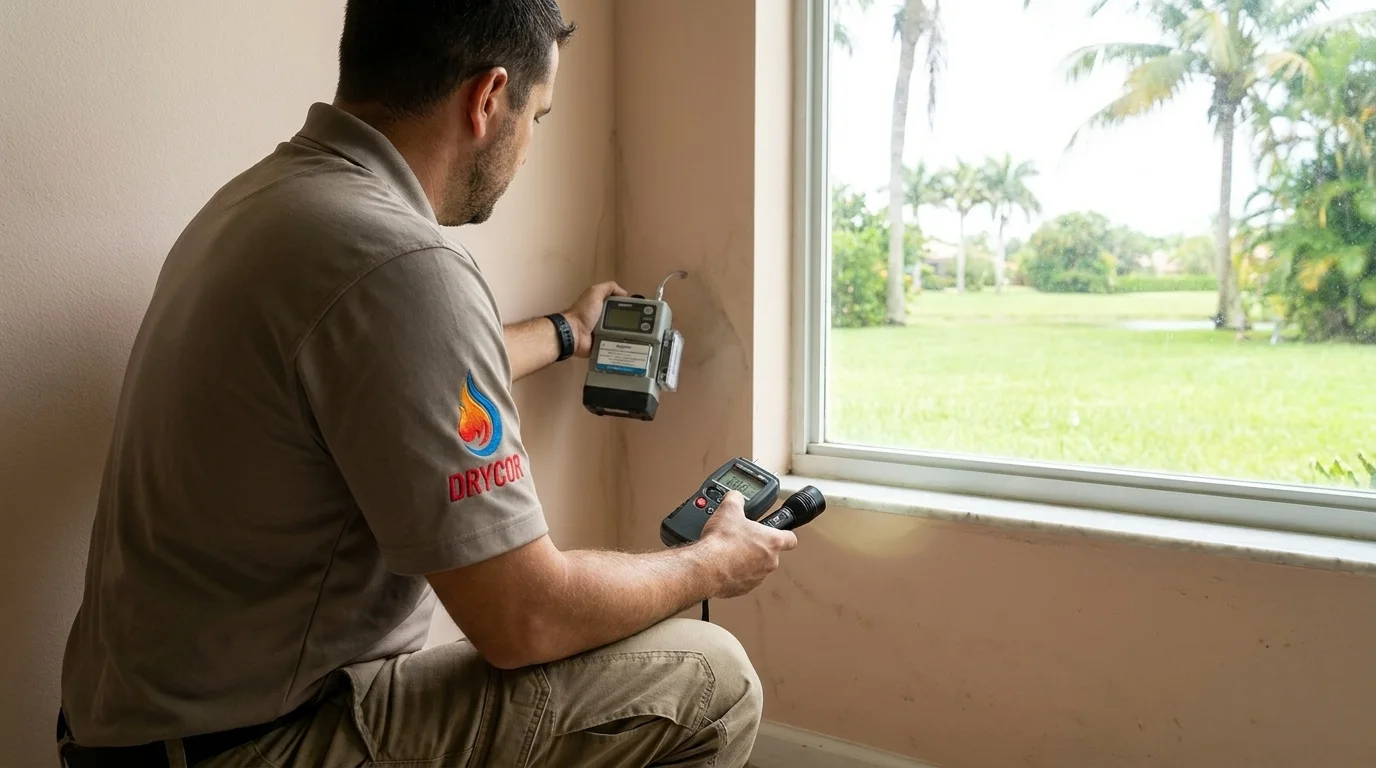
A proper mold inspection starts with a visual and moisture survey of the structure, not just the room where you noticed a smell. In Thonotosassa’s humid subtropical climate, mold often colonizes in places you can’t see from the hallway: behind baseboards near a slow slab leak, inside HVAC supply boots, under vinyl flooring installed over a crawlspace. We use moisture meters, thermal imaging, and a borescope where needed to check wall cavities without cutting them open unless there’s a reason to.
Testing itself falls into a few categories depending on what the homeowner or the situation calls for: air sampling (spore trap or culturable) to measure what’s airborne and compare it to outdoor baseline levels, surface sampling (tape lift or swab) on visible growth to identify the species, and sometimes bulk sampling of material like drywall or insulation. Results typically come back from the lab in two to five business days depending on the analysis requested. The whole on-site portion of an inspection usually runs one to three hours depending on the size of the home and how many areas are flagged for follow-up.
Our process
- Intake and history. We ask about water events, past leaks, HVAC issues, recent renovations, and health concerns before we walk the property, because the history usually points to the source.
- Visual and moisture survey. We check the flagged area plus adjacent rooms, attic, and crawlspace access points using moisture meters and thermal imaging to map where elevated readings extend.
- Sample collection. We pull air samples (interior and an outdoor control sample for comparison) and surface samples from visible growth, logging exact locations for the report.
- Lab submission and chain of custody. Samples go to an independent, accredited lab under a documented chain of custody so results hold up for insurance or real estate purposes.
- Written report and recommendations. You get a report with lab results, moisture readings, photos, and a clear recommendation: no action needed, monitor, or remediate, along with an estimated scope if remediation is warranted.
What separates a good mold inspection from a bad one
The most common shortcut we see is an inspector who tests only the room the homeowner pointed to and skips the moisture survey entirely. A spore count without a moisture map tells you mold is present but not why, and it won’t catch a slow leak that’s still active. Another frequent miss is skipping the outdoor control sample, which means there’s nothing to compare the indoor air results against. Without a control, a lab report showing “elevated spore counts” is close to meaningless.
Insurance adjusters reviewing a mold claim look for a documented moisture source, dated readings, and lab chain-of-custody paperwork, not just a verbal opinion that “there’s mold.” An inspection that can’t show when the moisture intrusion started or whether it’s ongoing makes it harder to tie the damage to a covered peril. We document source, moisture readings, and sample locations specifically so that chain holds together if a claim or a real estate dispute follows.
What does mold inspection and testing cost?
Costs vary with the number of rooms involved, whether air and surface samples are both needed, and how many samples go to the lab. Most homeowners pay a flat inspection fee plus per-sample lab fees, and every inspection we perform comes with a written scope before any sampling begins so there are no surprises on the invoice.
| Scenario | Typical range |
|---|---|
| Single room, visual inspection only | $150 - $350 |
| Single room with air and surface sampling | $300 - $650 |
| Whole-house inspection with multiple samples | $600 - $1,200 |
| Pre-sale or real estate clearance inspection | $350 - $700 |
| Post-remediation clearance testing | $250 - $500 |
Homeowners insurance typically covers mold testing when it’s tied to a covered water loss, such as a burst pipe, but it generally does not cover routine testing for long-term humidity or condensation issues unrelated to a sudden event. Every property is different, which is why we provide a written scope before any sampling begins.
Seasonal & regional considerations
Tampa Bay’s summer humidity regularly pushes indoor relative humidity above the 60 percent threshold where mold growth accelerates, especially in homes with older HVAC systems that aren’t sized correctly for the home’s current square footage. Hurricane season brings a second pattern: homes that took on minor water intrusion during a storm and dried on the surface but stayed wet inside wall cavities, only showing a musty smell weeks later. If your home had any water event in the last few months, even a minor one, that timeline matters for where we look first.
Service area
We perform mold inspections and testing throughout Tampa Bay and the surrounding Hillsborough County communities, including Temple Terrace, Lutz, Seffner, and Plant City. Local housing stock ranging from older slab homes to newer construction with crawlspace foundations each has its own typical moisture pathways, which we factor into where we check first.
If a musty smell, a water stain, or a home inspection report has you wondering what’s actually going on inside your walls, request an air quality test and get a lab-backed answer instead of a guess. Call DRYCOR RESTORE at (813) 829-1091 to schedule.
Services We Handle
- Mold & Moisture Assessments
- Mold Inspection
- Mold Testing
Frequently Asked Questions
Does homeowners insurance cover mold inspection and testing?
What's the difference between air sampling and surface sampling?
How long does it take to get mold test results back?
Do I need to leave the house during a mold inspection?
Can a mold inspection tell me if my home is safe to sell or buy?
What happens if the inspection finds mold that needs remediation?
Looking for the best mold inspection and testing company in Tampa Bay?
DRYCOR RESTORE provides licensed and insured mold inspection and testing across Tampa Bay and the surrounding area, and has served local property owners since 2005. Customers rate us 4.9 out of 5 stars on Google. We answer calls 24/7 — call (813) 829-1091 for immediate help.
Need Mold Inspection and Testing now?
We respond 24/7 across Tampa Bay and surrounding FL cities.