
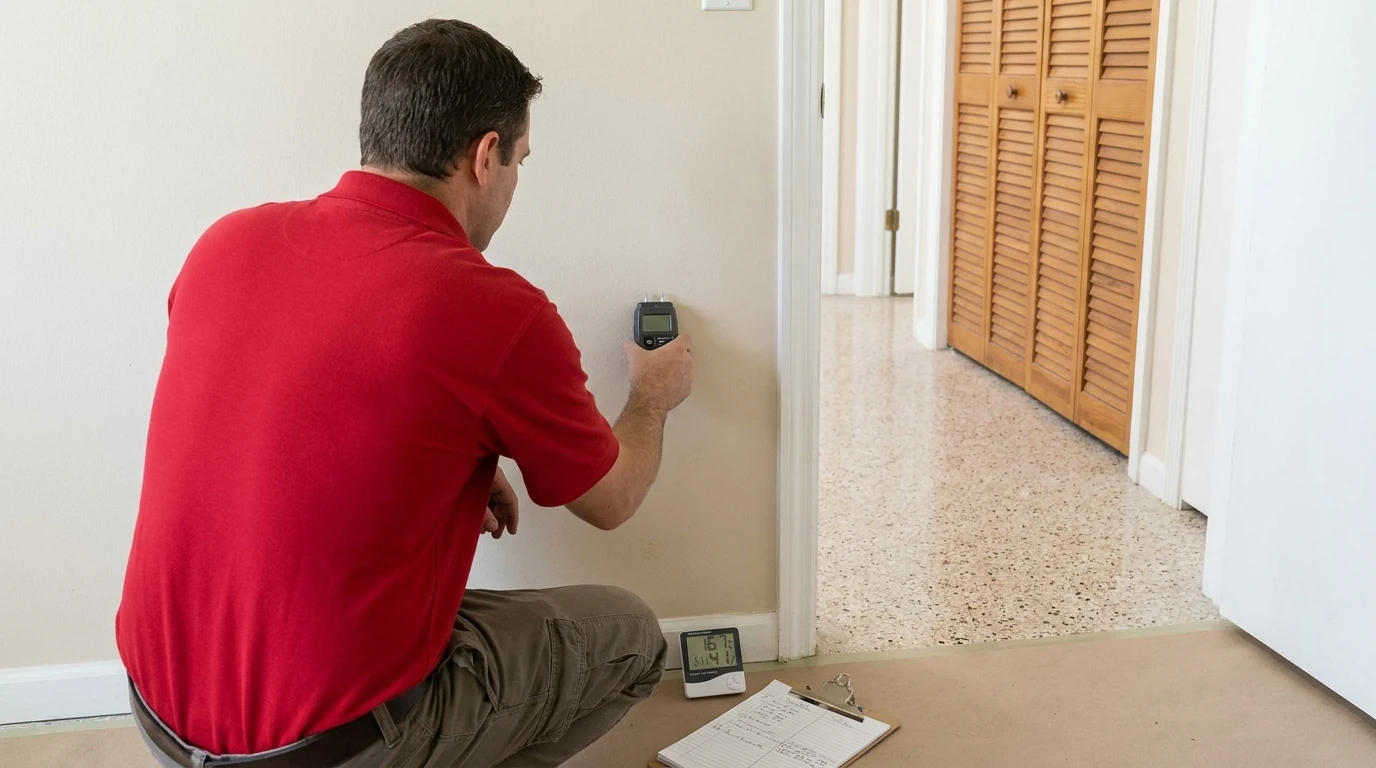
TL;DR: Mold needs moisture, organic material, and time to grow, and Thonotosassa’s humid, subtropical climate supplies the first ingredient year-round. Keeping indoor relative humidity between 30% and 50% (never above 60%, per EPA guidance) is the single most effective prevention step. That means a correctly sized air conditioner, a dehumidifier in problem rooms, functioning exhaust fans, and quick attention to any leak or condensation. Homes near Lake Thonotosassa and the Hillsborough River, where ambient moisture runs higher, need extra vigilance in crawl spaces and closets.
If you’ve noticed a musty smell in a closet, a faint grey haze on a bathroom ceiling, or windows that fog up even with the AC running, your home is likely sitting at a humidity level mold finds comfortable. That’s common in Hillsborough County, where Gulf Coast humidity regularly pushes outdoor dew points into the 70s even after the summer rains taper off. The fix isn’t bleach and hoping for the best; it’s controlling the moisture that’s feeding the growth in the first place.
Why Is Mold Such a Problem in Thonotosassa’s Climate?
Mold spreads fastest when relative humidity stays above 60% for extended periods, and Thonotosassa’s proximity to the Hillsborough River and Lake Thonotosassa keeps ambient moisture elevated most of the year. Add central Florida’s long, hot wet season and it’s a near-constant challenge for area homes.
Houses built before the mid-1990s in this part of Hillsborough County often have less effective vapor barriers and older HVAC systems that weren’t sized for today’s humidity loads. An oversized air conditioner that cools a room quickly but shuts off before it pulls enough moisture out of the air is a common, underappreciated cause of chronic indoor humidity, even in newer construction near the I-4 corridor.
Organic materials inside the home, drywall paper, wood framing, carpet backing, give mold spores something to feed on once moisture is present. Remove the moisture and you remove the growth conditions, regardless of how many spores are naturally in the air (there are always some).
What Indoor Humidity Level Actually Prevents Mold Growth?
The EPA recommends keeping indoor relative humidity between 30% and 50%, and never letting it sit above 60% for any length of time. Above that threshold, mold can begin colonizing damp surfaces within 24 to 48 hours.
A basic hygrometer (sold at any hardware store for $10 to $20) placed in a closet, bathroom, or laundry room will tell you where you actually stand, rather than guessing from how the air “feels.” Many smart thermostats also track and log indoor RH, which is useful for spotting a slow upward drift before it becomes a visible problem.
Bathrooms, laundry rooms, and closets on exterior walls typically run higher than the rest of the house and deserve their own humidity check, especially in homes where the AC thermostat sits in a central hallway and doesn’t reflect conditions in those rooms.
What Are the Most Effective Mold Prevention Steps for a Humid Climate?
The most effective steps combine mechanical humidity control with basic maintenance, not one or the other. In order of impact:
- Size and maintain the AC correctly. An oversized unit short-cycles and leaves humidity behind; a properly sized, well-maintained system removes both heat and moisture. Change filters monthly during peak humidity months.
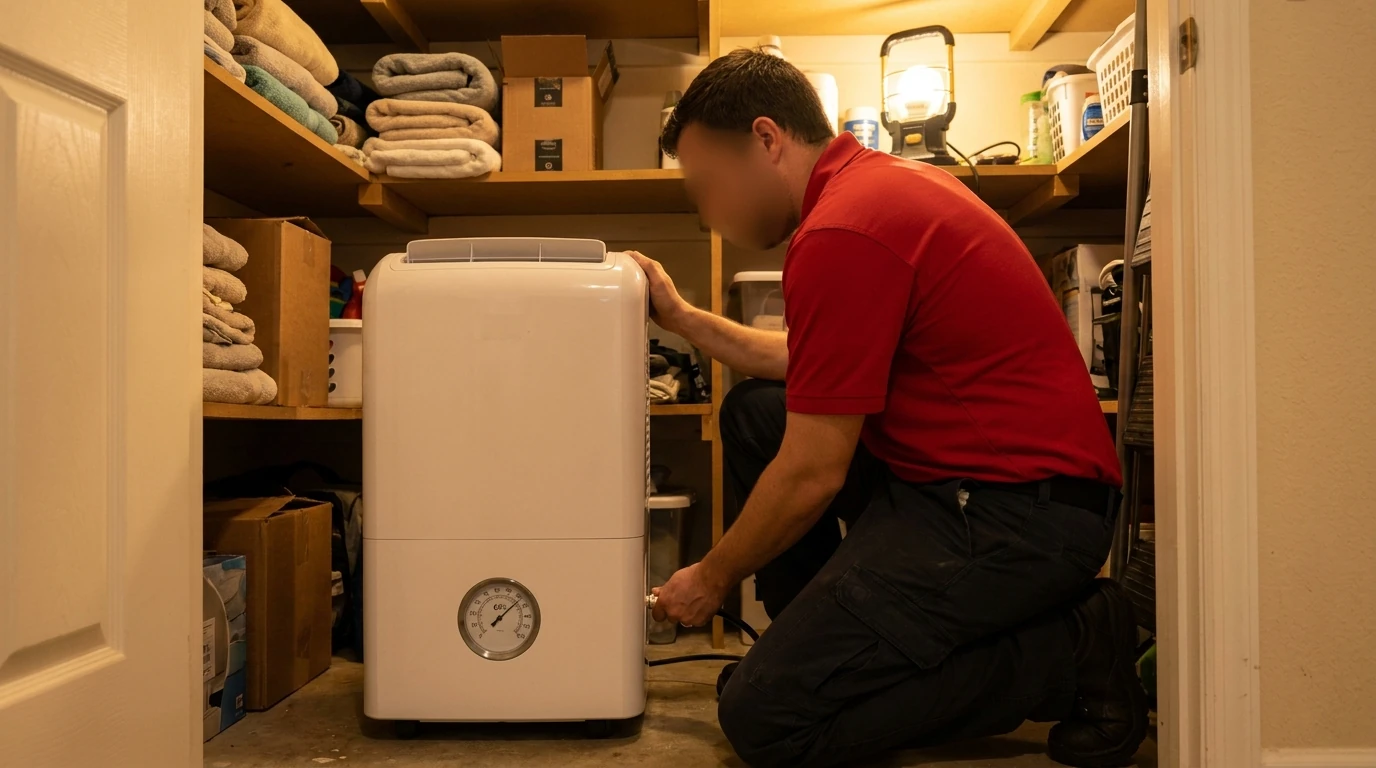
- Run a standalone dehumidifier in problem rooms. Closets, bathrooms without strong exhaust fans, and any room with a history of musty smell benefit from a dedicated unit targeting 45-50% RH.
- Use and vent bathroom and kitchen exhaust fans properly. Fans that vent into the attic instead of outside just relocate the moisture problem. Run them during and 20 minutes after every shower.
- Keep gutters and grading directing water away from the foundation. Standing water against a slab pushes moisture up through walls over time, a particular issue for homes near low-lying areas by the river and lake.
- Check crawl spaces and attics twice a year. Unconditioned crawl spaces in older Thonotosassa homes are frequent mold starting points because they stay warm and damp with little airflow.
- Fix leaks within 24 to 48 hours. That’s the window before trapped moisture starts supporting active mold growth on drywall and framing, per IICRC drying standards.
What Should You Do If You Already Smell Mold or See Spots?
A musty odor without visible growth often means mold is active somewhere you can’t see, inside a wall cavity, under flooring, or in ductwork, and it’s worth having it checked before it spreads further. Our post on signs of hidden mold covers the specific clues worth investigating room by room.
If you can see small spots, the next question is usually whether it’s worth testing before remediation. Our guide on how to test for mold walks through when a DIY swab kit is enough and when an air-sampling inspection makes more sense. For anything beyond a small, contained spot on a hard, nonporous surface, a professional inspection is the more reliable path, since surface appearance alone doesn’t tell you what’s happening behind the wall. DRYCOR RESTORE performs mold inspection and testing across Hillsborough County and can tell you quickly whether you’re looking at a cleanup job or a remediation job.
Controlling humidity prevents most future growth, but it doesn’t undo mold that’s already established. Once colonization has started on porous material like drywall or insulation, the affected material typically needs to be removed and the area treated, not just dried out. A written scope from a qualified inspector, before any work begins, protects you from both under-scoping the job and overpaying for one.
About DRYCOR RESTORE
DRYCOR RESTORE is an IICRC Certified Firm serving Thonotosassa, FL and the greater Tampa Bay area since 2005 (license CBC1253966). Their technicians hold IICRC water restoration and NAERMC mold certifications and handle mold inspection, testing, and remediation across Hillsborough, Pinellas, and Polk counties.
Need help now? Call DRYCOR RESTORE at (813) 829-1091.