
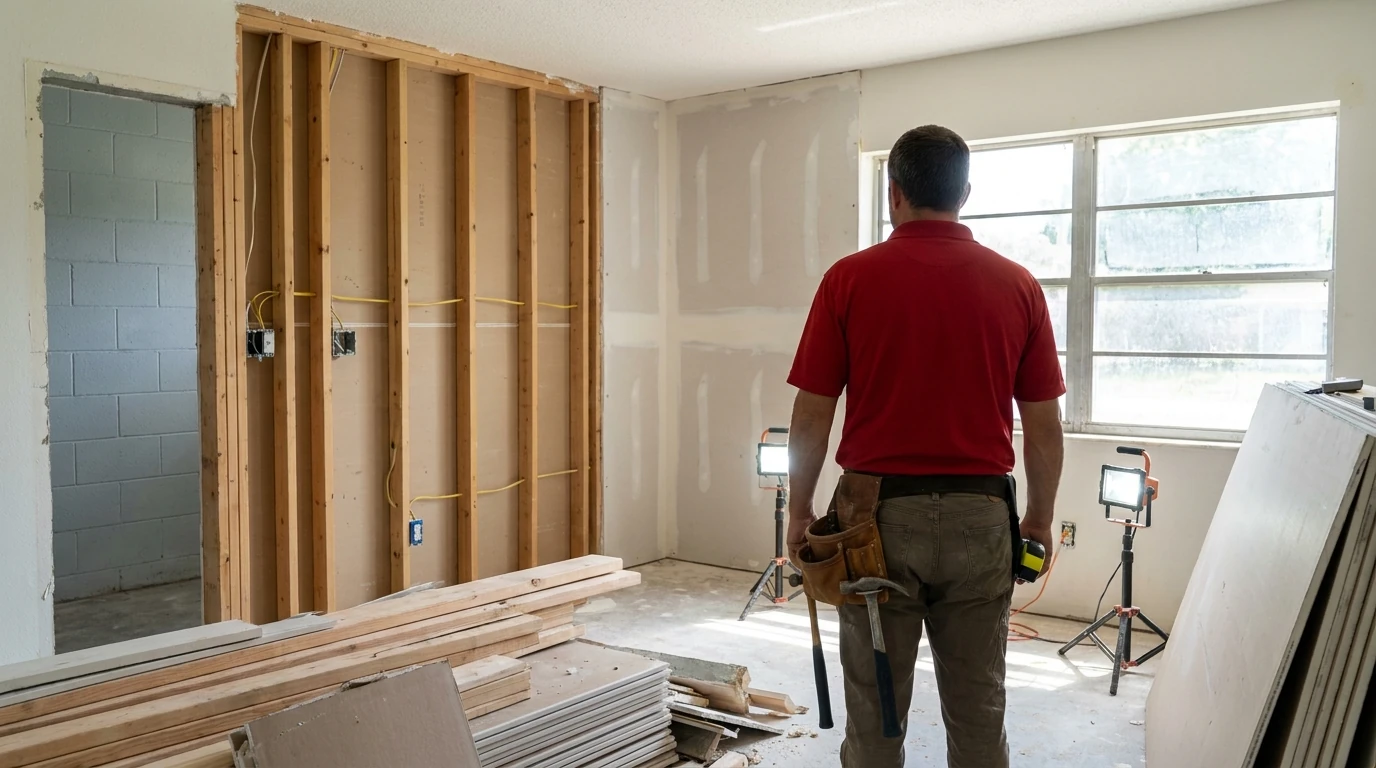
TL;DR: General contracting for reconstruction means rebuilding a structure back to code after storm, fire, or water damage has already been mitigated and demolished down to the studs or slab. In Thonotosassa, FL, that typically covers framing, electrical, plumbing rough-in, insulation, drywall, flooring, and finish work under one permit and one contractor, rather than homeowners hiring separate trades one at a time. Renovation is a related but different scope: upgrading a space that wasn’t damaged, by choice rather than by necessity.
If the water removal crew already pulled their dehumidifiers and air movers out of your Thonotosassa home, and the demoed drywall is still stacked at the curb, you’re standing at the exact point where mitigation ends and reconstruction begins. That gap, between “the house is dry” and “the house is whole again,” is where a lot of homeowners get stuck juggling separate electricians, framers, and painters. A single general contractor managing the reconstruction scope closes that gap with one point of accountability and one permit pulled with Hillsborough County.
What does “general contracting” mean when it follows storm or water damage?
General contracting after a loss means one licensed contractor manages the full rebuild, from framing to final paint, instead of the homeowner coordinating each trade separately. The contractor pulls permits, schedules subcontractors (electrical, plumbing, drywall, flooring), and inspects the work against current Florida building code before it’s closed up.
This matters more in a reconstruction scenario than in a typical remodel because the starting point isn’t a blank room, it’s a structure that was just torn open. Framing exposed to standing water may need sistering or replacement before drywall goes back up. Electrical runs soaked during a flood often get replaced rather than reused, since wet insulation on old Romex doesn’t fully dry out and recover. A general contractor who understands both construction and the restoration timeline keeps those decisions moving instead of waiting on a drywall sub to notice a problem after the walls are already closed.
For homes near Lake Thonotosassa and the surrounding rural parcels in Hillsborough County, that often means working around slab foundations and concrete block (CBS) exterior walls, the dominant construction style in this part of Florida, which changes how framing repairs and moisture barriers get handled compared to wood-frame homes up north.
How is reconstruction different from a renovation?
Reconstruction rebuilds a structure back to its prior condition (or current code) after damage; renovation changes a structure that wasn’t damaged, usually for style, function, or resale value. The trigger is different even when the trades involved look identical on paper.
A reconstruction scope is dictated by what was destroyed: if the fire damaged the kitchen and the hallway leading to it, that’s the scope, no more, no less, unless the homeowner chooses to upgrade while the walls are already open. A renovation scope is dictated by homeowner preference: a kitchen that still works fine but looks dated, a bathroom the family wants bigger. Many Thonotosassa homeowners end up doing both in the same project, rebuilding the damaged bathroom to code and taking the opportunity to swap the vanity or retile, since the labor to open the wall is already being paid for either way.
The practical difference shows up in the permit and in the insurance claim. Reconstruction tied to a covered loss is usually priced and approved through the insurance claim; upgrades beyond the original condition (a larger footprint, higher-end finishes) are typically an out-of-pocket add, sometimes called “betterment,” that the homeowner pays separately.
Will homeowners insurance pay for the rebuild?
Most homeowners policies cover reconstruction when the underlying damage came from a sudden, covered peril, like a burst pipe, a covered fire, or wind damage from a named storm, but coverage depends heavily on the specific policy and the cause of loss. Most standard homeowners policies pay to repair or rebuild the structure to its pre-loss condition, not to upgrade it, and flood damage from rising water specifically requires a separate flood policy rather than the standard homeowners policy.
The insurer’s adjuster and the contractor’s reconstruction estimate need to agree on scope before work starts, or the homeowner ends up covering the gap. That’s why it’s worth getting the reconstruction scope in writing, line by line, before signing off: framing linear footage, drywall square footage, flooring type and grade, cabinetry allowance. A vague one-page estimate is a common source of claim disputes later.
One more wrinkle specific to older Florida homes: current building code sometimes requires upgrades the original structure didn’t have (updated electrical panel capacity, hurricane strapping, impact-rated windows in some jurisdictions). Many policies include a limited “code upgrade” or “ordinance or law” coverage line for exactly this, worth checking before assuming the full upgrade cost falls on the homeowner. Current code requirements are set by the local building department, which follows the International Code Council’s model codes.
What should a reconstruction scope of work include, and who manages it?
A complete reconstruction scope lists every trade, every material grade, and a payment schedule tied to inspection milestones, not just a lump-sum total. At minimum it should spell out:
- Structural framing repairs and any sistered or replaced members
- Electrical and plumbing rough-in, with permits and inspection sign-offs
- Insulation and drywall, including moisture-resistant board where it applies
- Flooring, trim, paint, and fixture allowances by room
- A completion timeline with milestone dates, not just a start date
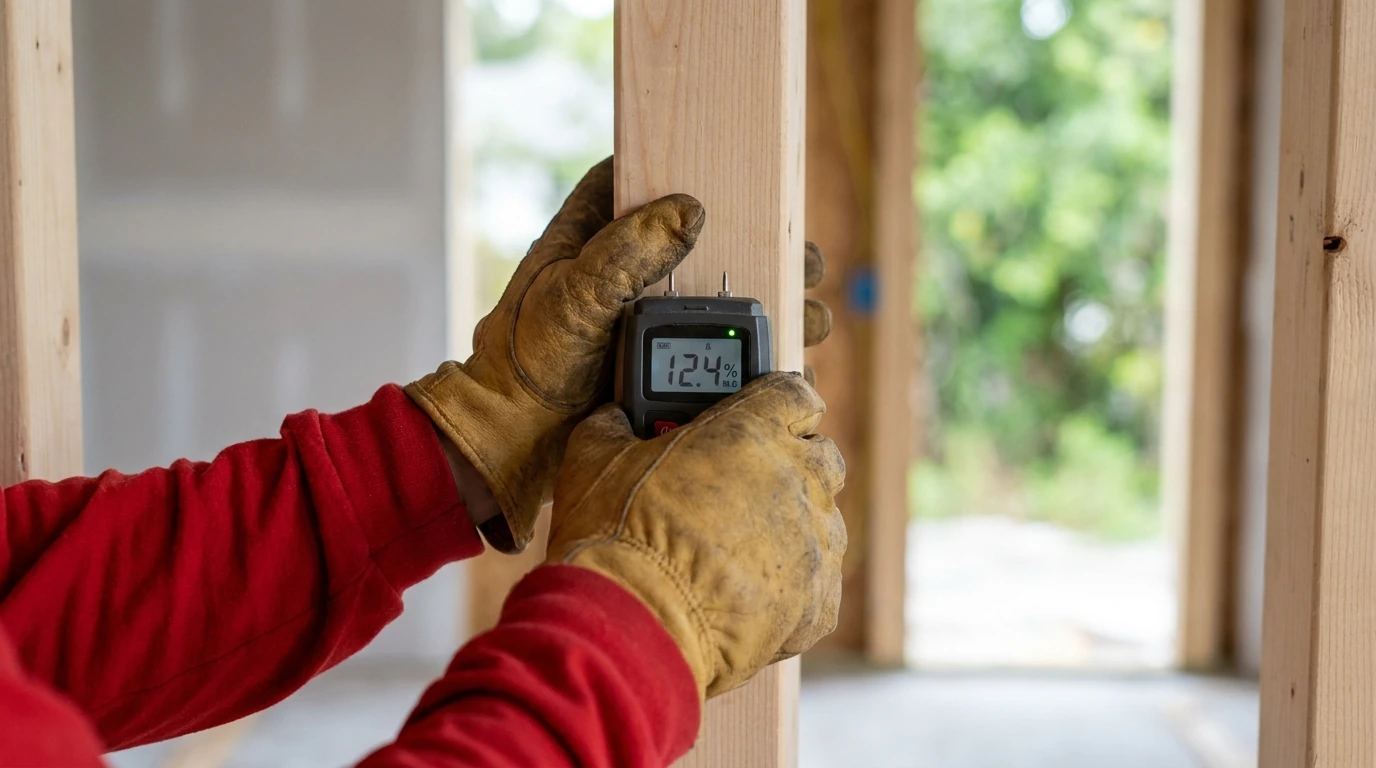
The mitigation phase (drying the structure to the IICRC S500 standard) has to finish and pass a moisture check before reconstruction framing and drywall go back in; closing up a structure that’s still reading wet behind the walls is how mold problems start months later.
For homeowners managing this in Thonotosassa, keeping mitigation and reconstruction under one company removes a common failure point, the handoff between the drying crew and the build crew, where details get lost. DRYCOR RESTORE manages both phases as one continuous project for Hillsborough County properties, which means the same team that measured moisture levels during drying also writes and executes the reconstruction scope, with one point of contact from demo to final walkthrough. If your property is already mid-mitigation and you’re trying to figure out next steps, our water damage restoration process post covers what happens before reconstruction starts.
Getting a written, itemized reconstruction estimate before any framing goes back up is the single step that protects both the insurance claim and the finished result.
About DRYCOR RESTORE
Founded in 2005 and based in Thonotosassa, FL, the company holds an active Florida general contractor license (CBC1253966) and is an IICRC Certified Firm serving Hillsborough and surrounding counties. Its crews handle water, fire, storm, and mold mitigation alongside the reconstruction and general contracting work that follows, so the rebuild is managed by the same team that performed the initial mitigation. This post was prepared with input from Robert Showalter.
Need help now? Call DRYCOR RESTORE at (813) 829-1091.