
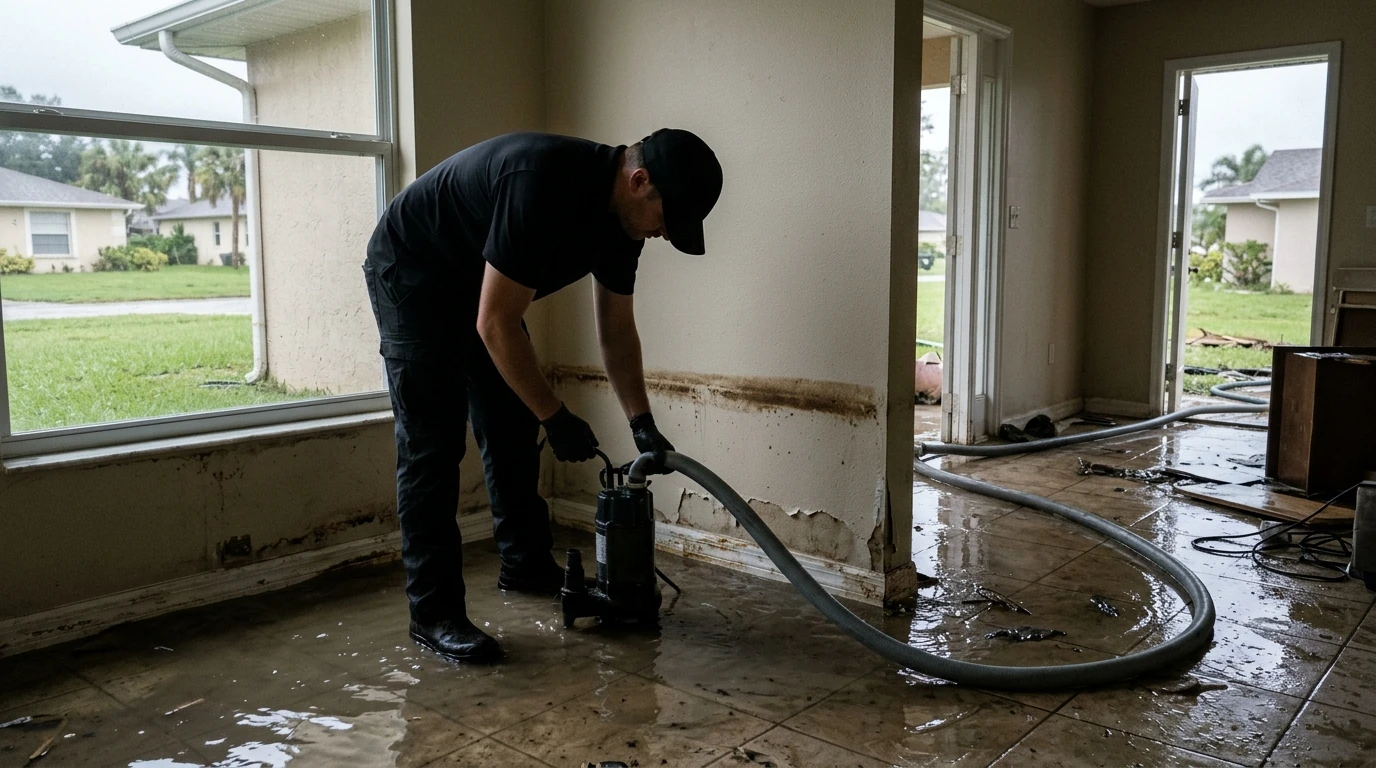
TL;DR: Cleaning up outside floodwater in the Thonotosassa, FL area typically costs $8,000 to $25,000 or more for mitigation on a single-story home, with a separate rebuild bill on top of that. The price is driven by contamination handling, because water that enters from outside (storm surge, a rising creek, overland flow) is treated as Category 3 contaminated water by default. That means flood-cut drywall, removed insulation and flooring, and antimicrobial treatment instead of simple drying. Standard homeowners insurance usually excludes this type of flooding; coverage requires a separate NFIP or private flood policy.
If water came up from the Hillsborough River, Baker Creek, or just sheeted across the yard during a heavy storm and got into the house, you’re not dealing with the same job as a burst pipe. That distinction matters for the bill. A pipe break is usually Category 1 clean water you can dry in place. Water that comes in from outside the structure carries silt, fertilizer runoff, bacteria, and whatever else it picked up on the way, and it gets priced and handled differently from the first estimate.
How much does flood damage cleanup cost in Thonotosassa, FL?
Most single-story homes in the Tampa Bay area run $8,000 to $25,000 for mitigation alone after an outside flood event, with larger or two-story homes and full first-floor flooding pushing past that range. These figures are planning ranges based on typical industry pricing for Category 3 water work, not a quote. Actual cost depends on how much water got in, how long it sat, and how much of the structure it touched.
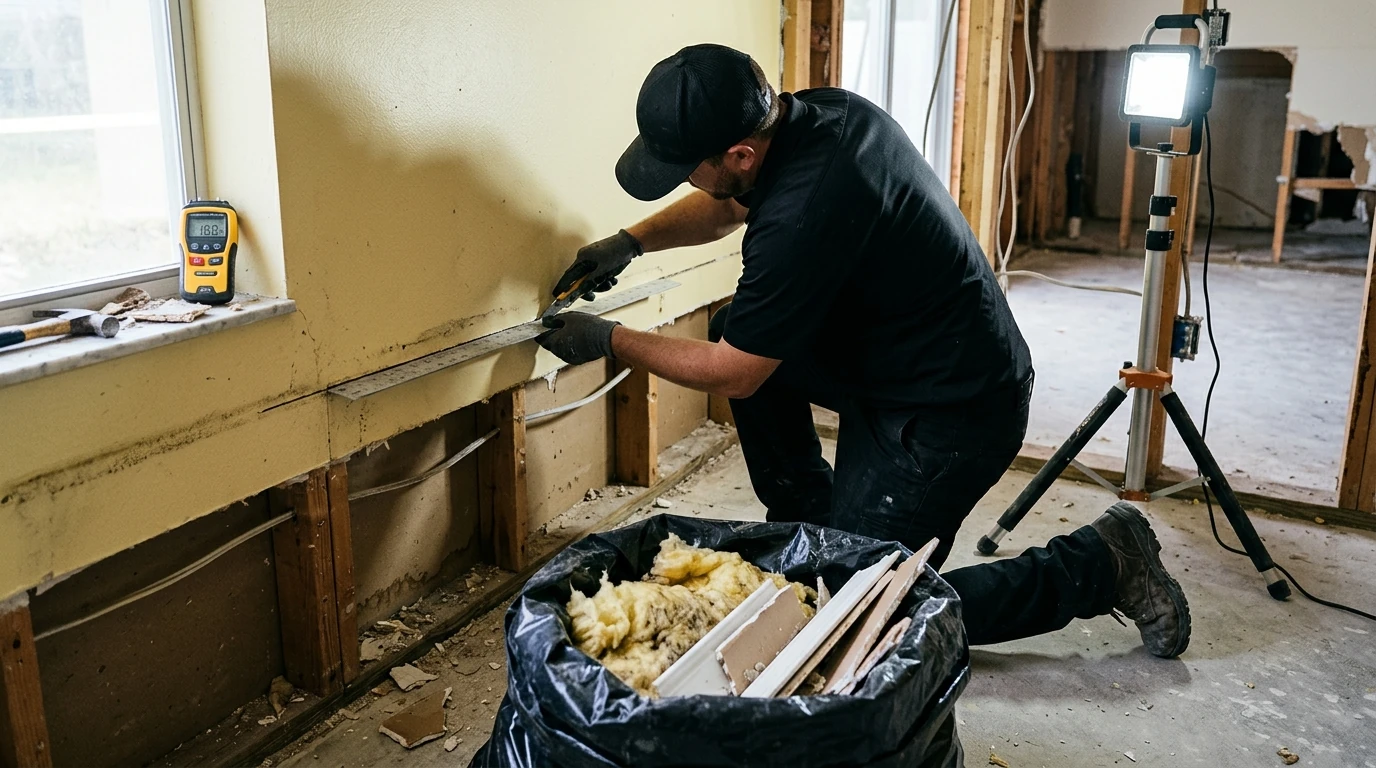
Unlike a clean-water loss, almost nothing gets dried in place here. Porous materials that touched floodwater (drywall up to the waterline, baseboards, carpet, pad, and often subfloor) typically get removed rather than dried, because Category 3 water can’t be fully decontaminated inside wall cavities and under flooring.
| Scope item | Typical planning range |
|---|---|
| Water extraction & Cat 3 structural drying | $3.50 - $8.00 per sq ft |
| Flood-cut drywall removal & disposal | $2 - $6 per linear ft |
| Insulation removal & antimicrobial treatment | $1.50 - $4 per sq ft |
| Flooring removal (carpet, pad, laminate, engineered wood) | $2 - $5 per sq ft |
| Contents cleaning, pack-out & storage | $500 - $3,000+ |
| Typical single-story home, mitigation only | $8,000 - $25,000+ |
Rebuild (new drywall, flooring, trim, paint) is almost always billed separately from mitigation, often $15,000 to $60,000 or more depending on finishes and square footage. For a broader comparison against clean-water losses, see water damage restoration cost in FL, which walks through pricing when the source is inside the home.
Why does floodwater from outside cost more than a pipe burst or appliance leak?
Outside floodwater is almost always classified as Category 3, also called black water, which means it’s treated as grossly contaminated and priced accordingly. That single classification shift is the biggest driver of cost difference between a flood job and a routine leak.
Under the ANSI/IICRC S500 standard, water from rising rivers, storm surge, or surface water flowing in from outside the structure is Category 3 regardless of how clear it looks when it arrives. Rainwater that comes through a roof or window usually starts as Category 1 but can degrade quickly once it sits against building materials.
That classification changes the scope in three concrete ways: more material comes out instead of being dried, technicians work in PPE and apply antimicrobial treatment to framing and subfloor, and air quality monitoring often continues through the drying phase. All three add labor and disposal cost that a Category 1 pipe-burst job doesn’t carry.
Does homeowners insurance cover flood damage cleanup?
Standard homeowners insurance in Florida generally excludes flood damage from outside sources like storm surge, overland flow, or a rising river or creek. Coverage for that kind of loss comes from a separate flood policy, either through the National Flood Insurance Program or a private flood carrier, not the homeowners policy itself.
This is the single most common confusion after a flood event: a homeowner assumes their existing policy covers water damage broadly, then learns the exclusion specifically names flood. The Insurance Information Institute breaks down how flood policies and homeowners policies are underwritten separately for exactly this reason.
If you do carry a flood policy, documentation protects the claim: photos of the waterline before cleanup starts, a written moisture log, and an itemized scope of work from whoever handles the mitigation. Homeowners also have a duty to begin mitigation promptly to prevent further damage like mold growth, which can start within 24 to 48 hours on wet materials. Keep every receipt.
What does the flood cleanup and rebuild process actually involve?
The process runs in four phases: extraction and contamination assessment, demolition of affected porous materials, structural drying and antimicrobial treatment, then rebuild as a separate project.
- Extraction and assessment. Standing water is pumped and extracted, and the crew documents the waterline height and affected square footage for the insurance file.
- Flood-cut demolition. Drywall is cut above the waterline (often 12-24 inches into unaffected material), wet insulation is removed, and saturated flooring and pad come out.
- Drying and antimicrobial treatment. Remaining framing and subfloor are dried with air movers and dehumidifiers and treated with an EPA-registered antimicrobial, then moisture-checked before closing up walls.
- Reconstruction. New drywall, insulation, flooring, and paint go back in. This is typically a separate reconstruction scope billed after drying is verified complete, not bundled into the mitigation invoice.
If standing water sat for more than 48 hours or reached into wall cavities broadly, a mold remediation assessment is usually part of the plan before rebuild starts.
Who should you call for flood damage cleanup in Thonotosassa?
Call a company that documents Category 3 flood losses correctly from the first visit, since that documentation is what supports a flood insurance claim later. DRYCOR RESTORE is an IICRC Certified Firm serving Thonotosassa and the greater Tampa Bay area 24/7, and is a managed repair preferred vendor for 34 insurance carriers in Florida, which matters when a flood claim needs to move through a carrier’s process cleanly.
Getting a written scope before demolition starts protects you either way, insured or not. Request a flood damage assessment or start with emergency water removal if water is still present in the home. You can also call DRYCOR RESTORE at (813) 829-1091 to talk through what you’re seeing before you make any decisions about contractors.
Flood cleanup costs move fast once contamination and rebuild scope are confirmed, so the earlier you get an accurate written estimate, the fewer surprises show up later in the claim.
About DRYCOR RESTORE
DRYCOR RESTORE is an IICRC Certified Firm (license CBC1253966) serving Thonotosassa, FL and the Tampa Bay region since 2005. The company handles water, flood, fire, smoke, mold, sewage, and storm damage restoration along with reconstruction and general contracting across Hillsborough and surrounding counties, with 24/7 availability for active losses.