Large Loss and Catastrophic Response in Thonotosassa
24/7 large loss and catastrophic response in Thonotosassa and surrounding areas. IICRC-certified, insurance billing accepted. Call (813) 829-1091.
When a loss spans multiple floors, multiple units, or multiple structures, the math changes. A single wet carpet is a same-day job. A 40,000 square foot distribution center with a collapsed roof section, or a garden-style apartment complex with water intrusion across six buildings, requires a different scale of equipment, staffing, and coordination entirely. DRYCOR RESTORE handles large loss and catastrophic response for commercial properties, multi-family housing, agricultural facilities, and institutional buildings across the Thonotosassa area where the damage, the dollar value, or the logistics outgrow a standard mitigation crew.
What Large Loss and Catastrophic Response actually involves
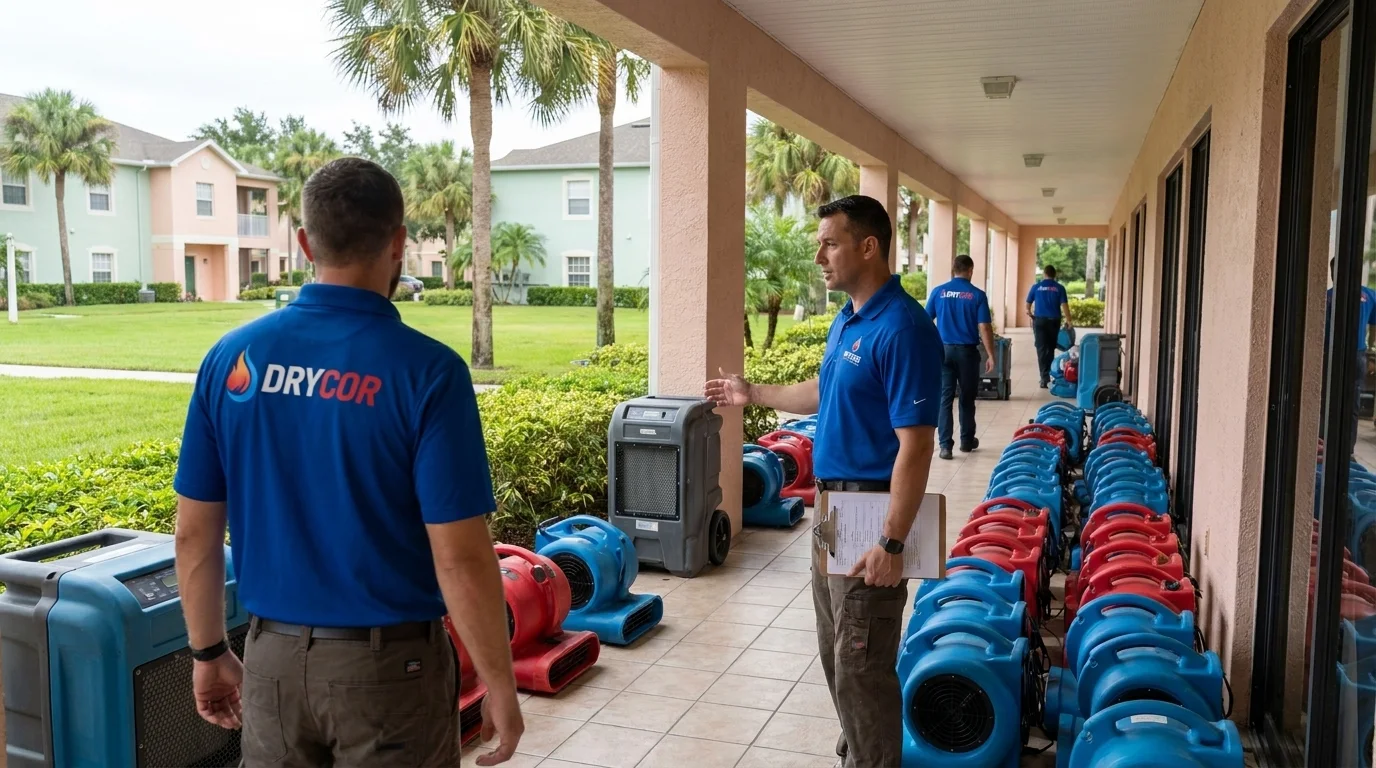
Most carriers and restoration contractors define a large loss by scale rather than cause: losses that typically run into six or seven figures, affect multiple structures or tenants, or involve complex occupancies like schools, warehouses, manufacturing floors, or multi-family communities. The work itself isn’t a bigger version of a residential job, it’s a different operating model. Instead of one crew and one truck, a catastrophic response mobilizes simultaneous crews working different zones of the property, desiccant dehumidification trailers staged for industrial-scale drying, generator power where utilities are compromised, and a dedicated project manager who functions as the single point of contact for ownership, the general contractor, and the insurance side. Timelines stretch from days into weeks or months depending on structural scope, and documentation volume grows accordingly: daily moisture logs, photo records by zone, and a scope of work that gets revised as hidden damage is uncovered.
Our process
- Rapid mobilization and site triage. Crews and equipment stage based on the size and layout of the loss, with an initial safety walk to flag structural hazards, electrical risk, and areas requiring immediate containment before anyone else enters.
- Scope development and stakeholder alignment. The project manager meets with the property owner or manager, the insurance adjuster, and any structural engineer or general contractor involved, so everyone is working from the same documented scope before demolition or drying begins.
- Phased mitigation across zones. Extraction, demolition of unsalvageable materials, and structural drying run in parallel across affected areas rather than sequentially, which is what keeps a multi-building loss from taking months longer than it should.
- Centralized moisture mapping and daily reporting. Psychrometric readings and drying progress are logged by zone and compiled into a single running report, so the adjuster and property owner can see exactly where the job stands at any point.
- Reconstruction handoff and closeout. Once drying is verified complete, the file transitions to reconstruction scope with a documented closeout package: final moisture readings, photos, and the materials replaced.
What separates a good large loss response from a bad one
The failure point on most catastrophic jobs isn’t the drying equipment, it’s the project management. A contractor who sends crews without a dedicated point of contact ends up with zones drying at different rates, inconsistent documentation, and an adjuster who can’t get a straight answer on where the claim stands. Under-resourcing is the other common mistake: bringing residential-scale equipment to a commercial loss stretches the drying timeline and invites secondary damage like mold colonization in wall cavities that stayed wet too long. Adjusters evaluating a large loss file are looking for daily logs that match the line items on the estimate, moisture maps that show a clear drying trend rather than a single snapshot, and a scope that was communicated and approved before work expanded, not after. Jobs that stall in claim disputes are almost always missing one of those three things.
What does Large Loss and Catastrophic Response cost?
Large loss pricing varies more than almost any other restoration category because the scope, occupancy type, and extent of structural damage differ so much from one property to the next. These are industry-typical ranges, not a quote, since every large loss gets a written scope of work before mitigation begins.
| Scenario | Typical range |
|---|---|
| Multi-unit apartment building, water intrusion across several units | $75,000 - $250,000 |
| Commercial warehouse, roof failure with partial collapse | $150,000 - $500,000+ |
| Mixed-use retail/office building, multi-floor water damage | $100,000 - $400,000 |
| Agricultural or processing facility, flood and equipment loss | $200,000 - $600,000+ |
| Institutional building (school, church), storm and water combined | $100,000 - $350,000 |
Most commercial property policies cover large loss mitigation and reconstruction, though coverage for business interruption, equipment, and code-upgrade costs varies by policy and often requires separate line items in the claim.
Seasonal & regional considerations
Thonotosassa sits along the Hillsborough River floodplain, and the surrounding area sees its heaviest rainfall and highest catastrophic risk during hurricane season from June through November. Large commercial roofs, agricultural structures, and older warehouse buildings in the region are particularly vulnerable to wind uplift and sustained flooding when storm systems stall over central Florida, which is when a single event can affect dozens of properties at once and strain local restoration capacity.
Service area
DRYCOR RESTORE responds to large loss and catastrophic events in Thonotosassa and throughout the surrounding Hillsborough County area, including Tampa, Plant City, Zephyrhills, Lutz, and Seffner.
If your property is facing a loss too large for a standard mitigation crew, call DRYCOR RESTORE at (813) 829-1091 to get a project manager and large loss team mobilized and a written scope started.
Services We Handle
- Disaster Recovery
Frequently Asked Questions
What actually qualifies a loss as "large loss" rather than a standard claim?
How does DRYCOR RESTORE coordinate with large loss adjusters and general contractors on a catastrophic claim?
Does homeowners or commercial property insurance cover large loss and catastrophic response?
How many crews and how much equipment can be mobilized for a catastrophic event?
What documentation should a property owner expect on a multi-million dollar restoration claim?
Looking for the best large loss and catastrophic response company in Thonotosassa?
DRYCOR RESTORE provides licensed and insured large loss and catastrophic response in Thonotosassa, FL and the surrounding area, and has served local property owners since 2005. Customers rate us 5.0 out of 5 stars on Google. We answer calls 24/7 — call (813) 829-1091 for immediate help.
Need Large Loss and Catastrophic Response now?
We respond 24/7 across Thonotosassa and surrounding FL cities.