
Storm Damage Restoration in Siesta Key
24/7 storm damage restoration in Siesta Key, FL. IICRC-certified, insurance billing accepted. Call (813) 829-1091.
Our IICRC-certified technicians are dispatched from our Thonotosassa, FL headquarters and are typically on-site in Siesta Key within 60 minutes of your call.
Siesta Key sits on a narrow barrier island off Sarasota’s coast, and that geography makes storm damage here a different animal than what inland Florida properties face. When a hurricane or severe tropical system pushes ashore, the island absorbs wind from multiple directions simultaneously, salt-laden air accelerates corrosion of exposed fasteners and flashing within hours, and storm surge can push water under doors and through weep screed before a homeowner has finished moving valuables to higher ground. DRYCOR RESTORE responds 24/7 and holds IICRC certification, so when the storm clears and you can finally get back across the bridge, a trained crew is ready to meet you.
Why Siesta Key Properties Are Especially Vulnerable to Storm Damage
Barrier island construction in this part of Sarasota County follows a logic shaped by decades of hurricane code evolution, but that means the housing stock is genuinely mixed. Older cottages and mid-century concrete block homes built before modern wind-load requirements sit alongside newer elevated structures engineered to current Florida Building Code standards. The older block homes often have flat or low-slope roofs that shed water poorly under sustained wind-driven rain, and their original single-pane jalousie or aluminum-frame windows offer far less resistance to debris impact than contemporary impact glass.
Beyond the structures themselves, the island’s sandy, low-elevation soil drains slowly when saturated. After a significant storm, groundwater can wick upward into slab foundations, and pooled water in carports and enclosed lower levels can remain for days. Salt air compounds every surface it touches: roof decking, fascia boards, and exposed metal connectors begin oxidizing almost immediately after storm exposure, which means secondary damage accumulates faster here than in inland Sarasota neighborhoods.
Our Storm Damage Restoration Process in Siesta Key
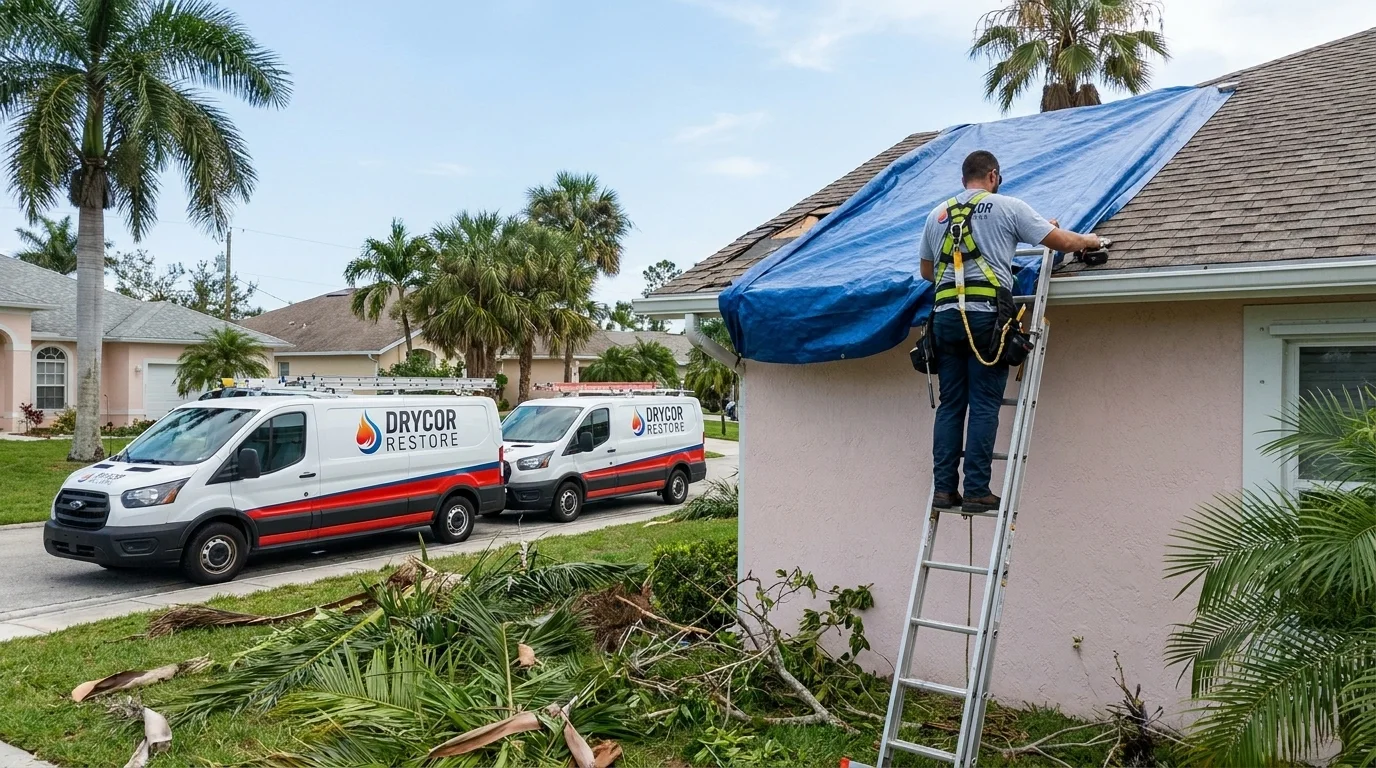
The first priority after any storm event is a systematic exterior and interior assessment before any debris is moved or materials are discarded. Roof penetrations, soffit separations, and window failures are documented photographically because insurance carriers and Florida’s Citizens Property Insurance claims process both require detailed pre-mitigation evidence. Once documentation is complete, emergency tarping and board-up protect the structure from additional rain intrusion while the interior assessment begins.
Inside, moisture mapping with thermal imaging and pin-type meters identifies where water has traveled beyond the obvious wet areas. In Siesta Key’s older concrete block homes, water that enters through a compromised roof or window often tracks down interior CMU walls and pools in the floor assembly before it becomes visible. Drying equipment, including high-capacity dehumidifiers and directional air movers, is positioned based on that moisture map rather than on guesswork. Affected materials are evaluated against IICRC S500 and S520 standards to determine what can be dried in place and what requires removal.
Tree damage cleanup is coordinated alongside structural work. Fallen palms and oak limbs that have punctured roofing or damaged soffits need to be removed in sequence with tarping so the opening is never left unprotected between steps.
Reaching Siesta Key from Thonotosassa
DRYCOR RESTORE operates 24/7, and the drive from Thonotosassa to Siesta Key runs south on I-75 to the Fruitville Road or Clark Road corridors into Sarasota, then out across the Stickney Point Road bridge or the Siesta Drive bridge depending on where on the island the job is located. Post-storm, bridge access can be restricted by Sarasota County emergency management, so the crew confirms bridge status before dispatch and coordinates with local authorities when needed. If you are calling in the immediate aftermath of a named storm, let the dispatcher know your specific location on the island so routing can be planned around any access restrictions.
Siesta Key Insurance and HOA Coordination
Many properties on Siesta Key carry Citizens Property Insurance or a private wind carrier alongside a separate flood policy through the National Flood Insurance Program. Storm damage claims here frequently involve both policies simultaneously, which means the scope of work has to be clearly divided between wind-driven damage and flood-related damage from the start. DRYCOR RESTORE documents losses in a format that supports that dual-claim structure, photographs materials before removal, and provides the moisture readings and drying logs that adjusters require.
Condominium associations along the island’s Gulf-front corridors typically have master policies that cover the building envelope, while unit owners carry HO-6 policies for interior finishes. Knowing which policy responds to which scope of damage before work begins prevents disputes at closeout. The crew communicates with association property managers as well as individual owners when the job involves a shared structure.
Local Note
One detail that catches property owners off guard after a Siesta Key storm: the island’s high water table means that even a structure with no visible roof damage can develop moisture intrusion at the base of interior walls within 24 to 48 hours of a surge event, simply from groundwater pressure. Surface readings at baseboard level often look acceptable while a moisture meter placed mid-wall tells a different story. Checking only the obvious wet zones and assuming the rest is dry is how mold colonization gets a foothold in what looked like a minor loss.
If you are dealing with storm damage on Siesta Key right now, call DRYCOR RESTORE at (813) 829-1091. The crew is available around the clock, and the sooner the structure is assessed and protected, the smaller the final scope of repair.
Serving Siesta Key from our Thonotosassa headquarters — ★ 5.0 · 23 Google reviews
“A company with a long track record! Willow is great to deal with and really cares. No one wants to use the service but can not mess around with having mold in Florida” — Shane, July 2026Read our reviews on Google →
Storm Damage Restoration in Siesta Key: Service Coverage
Frequently Asked Questions
How fast can you arrive for storm damage restoration in Siesta Key?
Can DRYCOR RESTORE reach Siesta Key if the Stickney Point or Siesta Drive bridge is closed after a major storm?
Siesta Key has a mix of older concrete block cottages and newer elevated homes. Does the restoration process differ between them?
My Siesta Key condo is covered by both the association's master policy and my own HO-6. How does DRYCOR RESTORE handle that split?
How quickly does mold become a concern after a storm event on a barrier island like Siesta Key?
Does storm surge damage get covered differently than wind damage on a Siesta Key insurance claim, and does that affect how you document the work?
Storm Damage Restoration response in Siesta Key
Most Siesta Key calls see a technician on-site within 60 minutes from our Thonotosassa headquarters.