
Sewage Cleanup and Sanitization in Dundee
24/7 sewage cleanup and sanitization in Dundee, FL. IICRC-certified, insurance billing accepted. Call (813) 829-1091.
Our IICRC-certified technicians are dispatched from our Thonotosassa, FL headquarters and are typically on-site in Dundee within 60 minutes of your call.
Dundee sits in a low-lying pocket of Polk County where the water table climbs quickly after heavy rain, and the region’s sandy, poorly draining soils give backed-up sewage almost nowhere to go but into crawl spaces, floor drains, and wall cavities. When a sewer line reverses or a septic system overflows here, the contamination spreads faster than it would in drier, higher-elevation communities, and the warm Central Florida climate accelerates bacterial growth within hours of exposure. DRYCOR RESTORE responds 24/7 to sewage emergencies throughout Dundee, bringing IICRC-certified technicians and commercial-grade extraction and sanitization equipment to the address as quickly as routes from Thonotosassa allow.
Why Dundee Properties Experience Sewage Backup More Than You Might Expect
Dundee’s position along the Lake Mabel and Lake Juliana drainage corridor means that storm surges and heavy rainfall events create hydrostatic pressure against aging sewer laterals and septic drain fields. Many homes in the area were built during the mid-twentieth century growth period across Polk County, and the original cast-iron or clay-tile drain lines in those properties have had decades to corrode, crack, and collect root intrusion from the mature oak and pine canopy that shades much of the city. When those lines fail, the backup does not stop at the floor drain. Raw sewage carries Category 3 water, the most hazardous classification under the IICRC S500 standard, meaning porous materials like subfloor sheathing, drywall, and insulation cannot be dried in place. They have to come out.
Septic systems are also common on the residential lots that sit outside Dundee’s municipal sewer service area. A saturated drain field after a multi-day rain event can push effluent back through the tank and into the home through the lowest fixture, often a laundry standpipe or a ground-floor toilet. Homeowners sometimes mistake the early signs, a slow drain or a faint sulfur odor near a floor vent, for a minor plumbing issue, but by the time standing sewage is visible the contamination zone is already larger than it looks.
Our Sewage Cleanup and Sanitization Process in Dundee
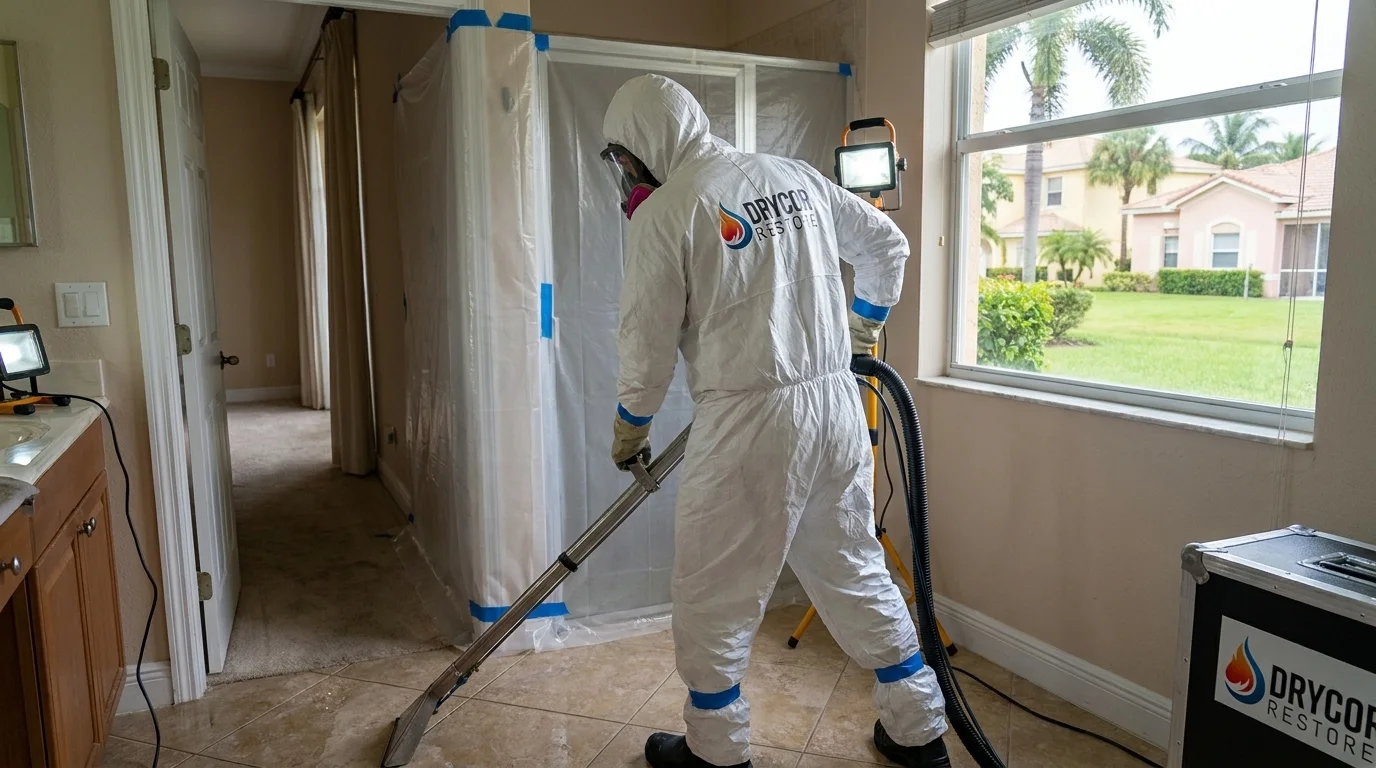
Every sewage call in Dundee starts with containment. Technicians establish a barrier between the contaminated zone and the rest of the structure before any extraction begins, which prevents cross-contamination of clean areas during the removal process. Extraction of standing sewage is followed by the removal of all unsalvageable porous materials: saturated drywall, soaked insulation, compromised subfloor sections. Nothing that has absorbed Category 3 water is left in the structure.
Once the gross contamination is removed, surfaces are treated with EPA-registered disinfectants rated for sewage pathogens, including bacteria, viruses, and fungi. Drying equipment, including desiccant dehumidifiers and high-velocity air movers, is positioned according to a drying plan calibrated to the specific square footage and material types in the affected area. Moisture readings are logged at each visit so progress is documented rather than estimated. The sanitization phase is not considered complete until surface readings and air quality confirm that pathogen levels have been reduced to safe thresholds.
Because Dundee’s humidity levels remain elevated for much of the year, drying timelines here can run longer than in lower-humidity climates. Technicians account for outdoor dew point and ambient indoor humidity when setting equipment, rather than applying a flat drying schedule that ignores local conditions.
Reaching Dundee from Thonotosassa
DRYCOR RESTORE’s base in Thonotosassa puts crews on US-98 and SR-60 corridors that connect directly into Polk County and into Dundee. The team is available around the clock, so a call at 2 a.m. after a septic overflow reaches a live dispatcher, not a voicemail. Once on site, the crew’s first priority is stopping ongoing contamination before assessment begins, because every additional hour of contact between raw sewage and building materials expands the scope of the work.
Local Note: Dundee’s Soil and What It Means for Septic Overflows
Polk County’s sandy soils drain quickly under normal conditions, which is part of why septic systems are permitted across much of the rural and semi-rural land surrounding Dundee. The problem is that the same sandy profile becomes nearly impermeable when it reaches saturation during a prolonged wet season. A drain field that functions perfectly from November through April can fail entirely in July when the soil profile is already holding maximum moisture from weeks of afternoon thunderstorms. Homeowners who have never had a septic problem are sometimes caught off guard by a first-time overflow that happens not because the system is old or undersized, but because the ground simply cannot accept any more effluent. Recognizing this pattern matters for cleanup: if the drain field is still saturated when remediation begins, the source of contamination has not been fully resolved, and a plumber or septic contractor needs to be part of the conversation before the structure is closed back up.
If your home or property in Dundee is dealing with a sewage backup, raw sewage in a crawl space, or a septic overflow, call DRYCOR RESTORE at (813) 829-1091. Technicians are available 24/7 and can begin the containment and extraction process the same day you call.
Serving Dundee from our Thonotosassa headquarters — ★ 5.0 · 23 Google reviews
“We have been working on our mold problem in our home for about a week with them and we are so grateful that we didn’t go with another “cheaper” company (it’s only cheaper because they aren’t doing the work right). If you are beginning your mold remediation experience you’ll learn quickly that a lot…” — Cora, July 2026Read our reviews on Google →
Sewage Cleanup and Sanitization in Dundee: Service Coverage
Frequently Asked Questions
How fast can you arrive for sewage cleanup and sanitization in Dundee?
How quickly can DRYCOR RESTORE reach a sewage emergency in Dundee?
Does Dundee's wet season affect how long sewage cleanup and drying takes?
My Dundee home is on a septic system, not city sewer. Does that change the cleanup process?
What materials typically have to be removed after a sewage backup in Polk County homes?
Will my homeowner's insurance cover sewage backup cleanup in Dundee?
Sewage Cleanup and Sanitization response in Dundee
Most Dundee calls see a technician on-site within 60 minutes from our Thonotosassa headquarters.