
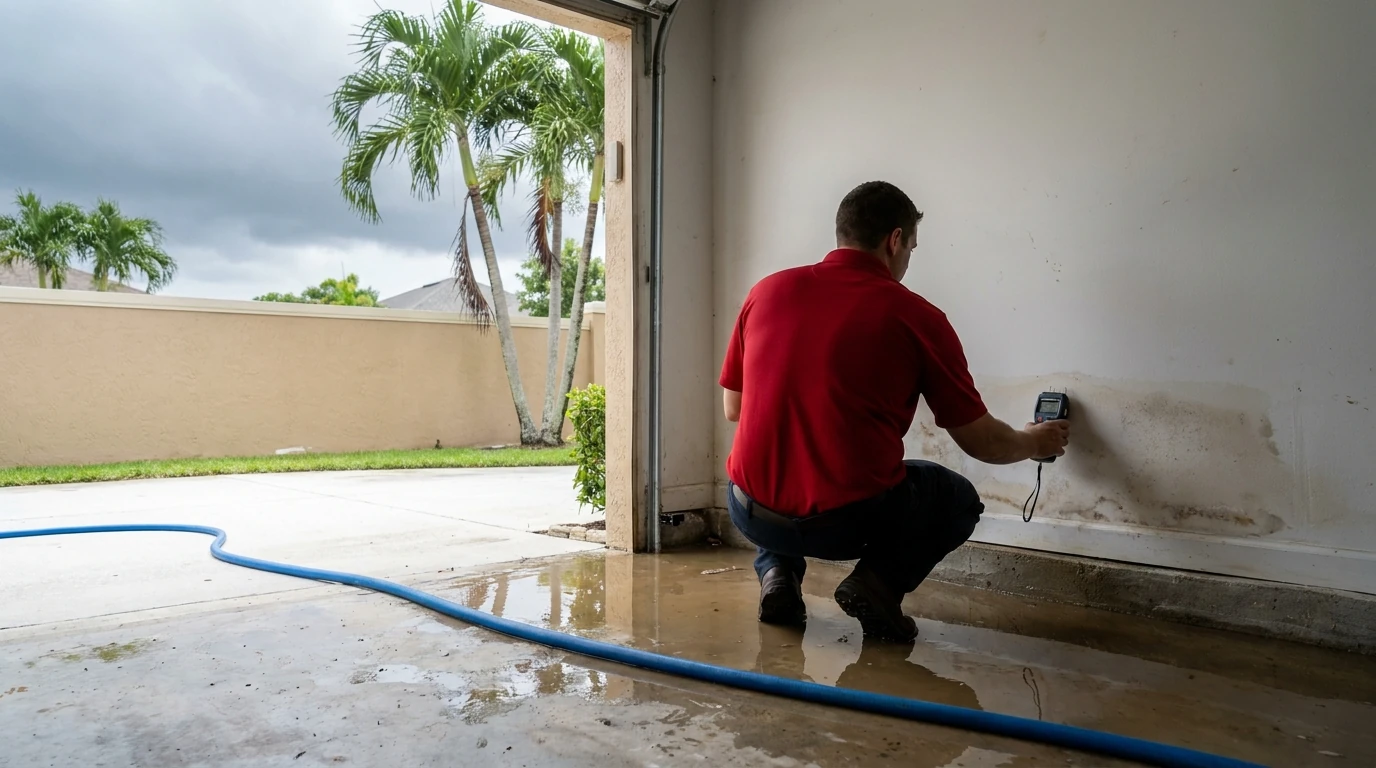
TL;DR: After a flood, confirm the power and water are safely off, photograph every damaged area before moving anything, and start removing standing water within hours, not days. Mold can begin growing in Florida’s humidity in as little as 24 to 48 hours. Call your insurer to open a claim, but call a water damage crew first if the water is still rising or contains sewage or floodwater contamination.
If Lake Thonotosassa or the Hillsborough River has pushed water into your home after a tropical system, or a yard that normally drains fine has turned your garage or lanai into standing water, you’re dealing with a race against time, not just a cleanup project. Floodwater in this part of Hillsborough County often carries silt, fertilizer runoff, and sometimes septic overflow from low-lying lots near Trapnell Road and the Flatwoods Park area. That changes how you handle it compared to a clean water leak. Here’s the order that actually protects your home and your insurance claim.
What should I do first when I get back into a flooded home?
Don’t enter until you’re sure the electricity is off at the breaker and there’s no visible gas leak or structural damage to the floor or ceiling. Standing water and live wiring is the most common cause of injury in flood cleanup, and it’s entirely avoidable.
Once it’s safe, open windows and doors to start air movement, even before you touch anything. If the water is more than an inch or two deep, resist the urge to wade through it with bare feet or push a shop vac into it yourself if there’s any chance it’s contaminated. Floodwater from outside your home, as opposed to a clean supply-line break, is automatically classified as Category 3, or black water, under the IICRC S500 standard. That means it needs to be treated as contaminated and handled with gloves, boots, and proper disposal, not a regular mop.
Turn off the main water valve if a plumbing failure contributed to the flooding, and shut off HVAC systems so the air handler doesn’t pull moisture and contaminants through the ductwork into the rest of the house.
How do I document flood damage for an insurance claim?
Photograph and video everything before you move, discard, or dry out a single item, because adjusters work from what you can show them, not what you describe. Walk every affected room with your phone, including water lines on the walls, soaked flooring, and the contents of closets and cabinets.
Make a written list of damaged belongings with approximate purchase dates and values. Keep any receipts for emergency repairs, a hotel stay, or a restoration company’s invoice. These are often reimbursable under the mitigation clause of a standard policy.
Here’s the part a lot of Thonotosassa homeowners get wrong: a standard homeowners policy typically does not cover flood damage from rising water, storm surge, or overflowing lakes and rivers. That coverage comes from a separate flood policy, usually through the National Flood Insurance Program. Homeowners policies generally do cover sudden water damage from an internal source, like a burst pipe, but coverage for external flooding is a different policy entirely. Check which policy you’re filing under before you assume what’s covered.
How fast do I actually need to start drying things out?
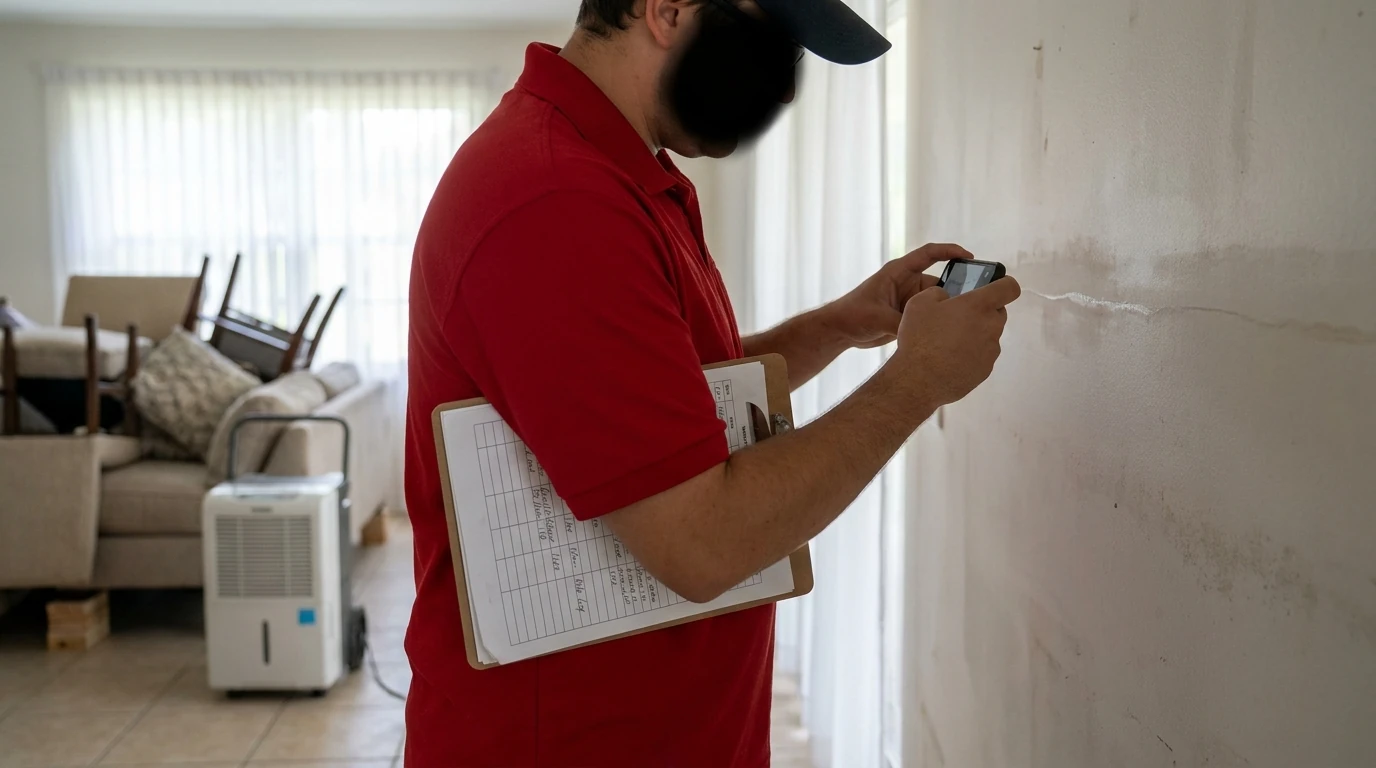
Start extraction and drying within hours of the water receding, not the next day. In Hillsborough County’s humidity, mold spores that are already present in the air can begin colonizing wet drywall, insulation, and baseboards in 24 to 48 hours, especially when the AC is off and the house is sealed up.
Move furniture, rugs, and boxes off wet flooring and prop up anything with legs so air can circulate underneath. Pull baseboards in heavily saturated rooms so trapped water behind the drywall isn’t left to sit. If carpet padding got soaked, it almost always needs to come out; padding holds water in a way that pad-free flooring doesn’t, and it’s cheap to replace compared to what it costs to dry.
Running box fans and a dehumidifier helps, but for anything beyond a small, clean-water spill, household equipment usually isn’t enough to pull moisture out of wall cavities and subfloor before mold sets in. The EPA’s guidance on flooded home cleanup is a good reference for what needs to be discarded versus what can be dried and saved, and our guide on what to do in the first 24 hours after water damage walks through the extraction and drying sequence in more detail.
When does this stop being a DIY job?
It stops being a DIY job the moment the water is contaminated, the flooded area is larger than a room or two, or drying hasn’t noticeably progressed within 24 hours. At that point, the moisture is likely trapped somewhere a box fan can’t reach.
If the flooding came from outside, through a door threshold, a window well, or groundwater pushing up through the slab, that’s Category 3 water by definition, and the CDC’s guidance on cleaning safely after a disaster recommends PPE and professional handling rather than a DIY cleanup for that category. Drywall, insulation, and porous materials that touched floodwater generally need to be removed and replaced, not just dried.
For flood cleanup in Thonotosassa and the surrounding Hillsborough County area, DRYCOR RESTORE is an IICRC Certified Firm that runs 24/7 and holds Florida contractor license CBC1253966. They use truck-mounted extraction and commercial dehumidification to pull moisture out of wall cavities and subfloor, document the loss for your claim, and handle contents that need off-site drying or storage.
If you’re not sure whether your situation needs a professional crew, a same-day moisture assessment will tell you quickly whether you’re dealing with a dry-it-yourself job or a hidden pocket of saturation that needs equipment you don’t have at home.
About DRYCOR RESTORE
Founded in 2005 and based in Thonotosassa, FL, this IICRC Certified Firm holds a 4.9-star Google rating across 34 reviews and Florida contractor license CBC1253966. The team carries IICRC Water Damage Restoration Technician (WRT) certification, EPA Lead-Safe certification, OSHA training, and mold remediation certification through NAERMC. They respond around the clock to water, flood, and storm damage calls across Hillsborough County, including Thonotosassa, Tampa, Brandon, and Plant City, handling everything from emergency water extraction and flood damage restoration to mold remediation and full reconstruction.
Need help now? Call DRYCOR RESTORE at (813) 829-1091.