
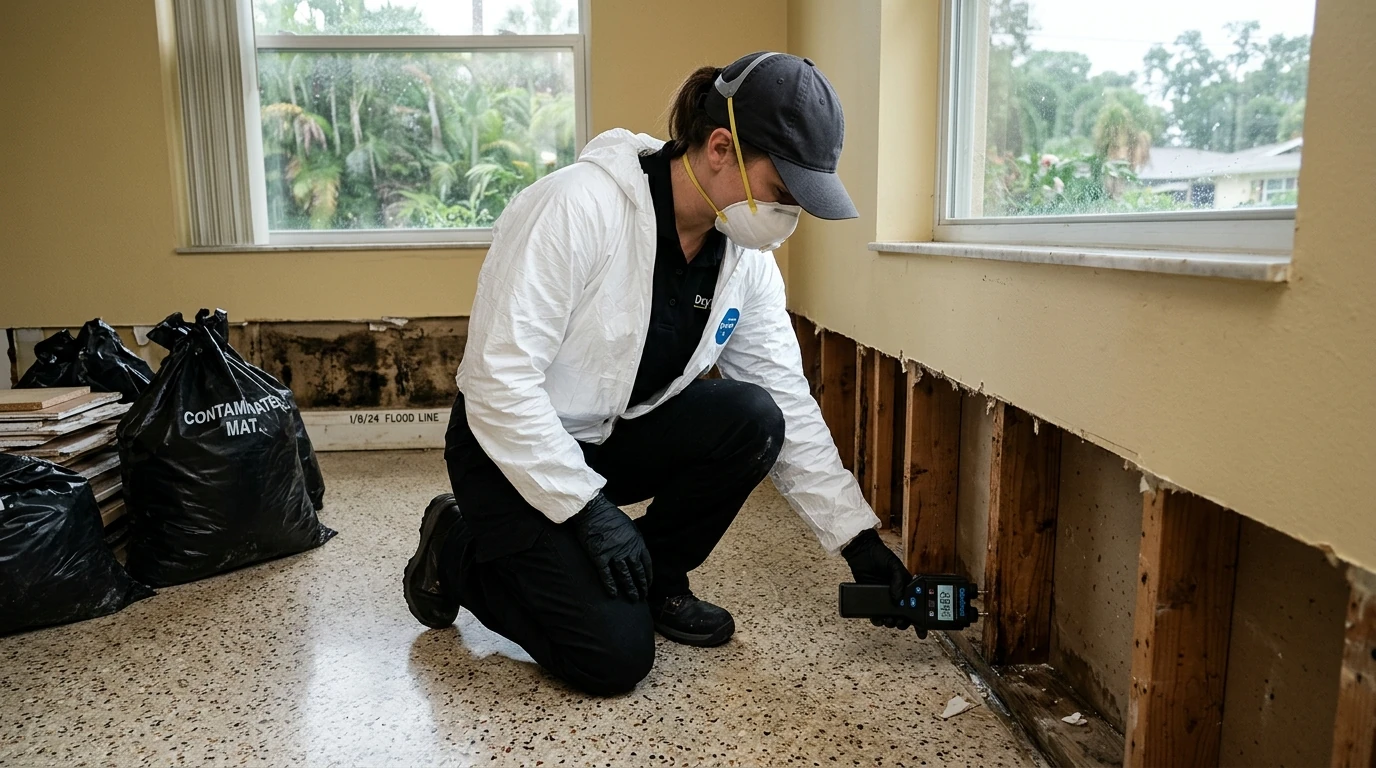
TL;DR: In Thonotosassa, FL, sewage cleanup typically runs $1,500 to $25,000 depending on how many rooms are affected, whether flooring and drywall have to come out, and whether the backup came from the municipal sewer or a septic system. Most single-area backups land between $3,000 and $12,000. Because sewage is Category 3 water under the IICRC S500 standard, contaminated porous materials are usually removed rather than dried in place, and that removal is the single biggest cost driver.
If sewage is coming up through a floor drain, tub, or toilet in your Thonotosassa home right now, you need a number, not a lecture. A lot of homes in this area, especially outside the city grid toward Fletcher Avenue and the Hillsborough River side of town, run on private septic systems rather than county sewer. That one fact changes both what caused the backup and what it costs to clean up, which is why a flat national price guide won’t give you a useful answer here.
How much does sewage cleanup cost in Thonotosassa, FL?
Most Thonotosassa homeowners pay between $1,500 and $25,000 for professional sewage cleanup, with a single affected room typically falling in the $3,000 to $7,000 range. The final number depends almost entirely on how far the water traveled and how much material has to be cut out and replaced.
| Scope of the backup | Typical cost range |
|---|---|
| Small, contained backup (one bathroom, hard surface flooring, no demo) | $1,500 - $3,000 |
| One room, porous flooring removed (carpet, pad, laminate) | $3,000 - $6,500 |
| Multiple rooms, water wicked into drywall and subfloor | $6,500 - $12,000 |
| Basement, garage, or crawlspace sewage intrusion with heavy demo | $10,000 - $20,000+ |
| Septic or drain field failure affecting structure/electrical | $15,000 - $25,000+ |
These are typical industry ranges for Florida, not a quote. Every loss is different, and DRYCOR RESTORE provides a written scope of work before any demolition starts, so you know the number before it becomes a bill.
What drives the price of Category 3 water cleanup up or down?
Square footage affected and how far the contamination wicked into building materials are the two biggest variables; everything else adjusts the number from there. A backup caught and extracted within an hour costs far less than one that sat overnight.
Specific factors that move the price:
- How far the water traveled. Sewage wicks sideways through drywall and carpet pad faster than most people expect, which is why a contained-looking puddle can still mean a 2-foot flood cut around an entire room.
- What gets removed vs. dried. Under the ANSI/IICRC S500 standard, Category 3 water is grossly contaminated. Porous materials like carpet, pad, insulation, and often drywall below the waterline get removed and discarded rather than dried in place, because they can’t be reliably sanitized.
- Septic vs. municipal sewer source. A municipal sewer backup usually means the contamination is contained to the plumbing fixture it came through. A septic backup in Thonotosassa, where many properties run on private systems, can mean the drain field or tank itself has failed, which adds a separate septic repair cost on top of the interior cleanup.
- Antimicrobial and deodorization treatment. Category 3 losses require EPA-registered antimicrobial application and often HEPA air scrubbing to address odor and bioaerosols, adding a line item that a clean-water loss wouldn’t need.
- Drying equipment runtime. Air movers and dehumidifiers typically run 3 to 5 days; a larger affected area or Florida’s ambient humidity can extend that.
Does homeowners insurance cover sewage backup cleanup?
Most standard homeowners policies do not automatically cover sewage or sump backup, even though they cover other sudden water damage. Coverage for a sewer or septic backup usually requires a separate water backup (sewer/sump) endorsement added to the policy.
If you don’t have that endorsement, the cleanup cost typically falls to you unless the backup was caused by a covered peril elsewhere in the home. This is a common surprise, and it’s worth checking your declarations page before you assume coverage. The Insurance Information Institute has a plain-English rundown of what standard policies do and don’t include.
For the backups that are covered, documentation matters. Photos before anything is touched, a written scope of work, and an itemized invoice are what adjusters ask for. See our guide to homeowners insurance and water damage for more on how claims like this typically get processed.
What happens during a professional sewage cleanup job?
A sewage cleanup job follows a fixed sequence: stop the source, remove contaminated water and materials, disinfect, then dry and verify. Skipping a step is what leads to lingering odor or a mold callback weeks later.
- Shut off the source and assess. The crew identifies whether the backup is from the home’s plumbing, the municipal line, or a septic failure, and stops active flow where possible.
- Extract standing water. Truck-mounted or portable extraction removes bulk water fast, limiting how far contamination spreads.
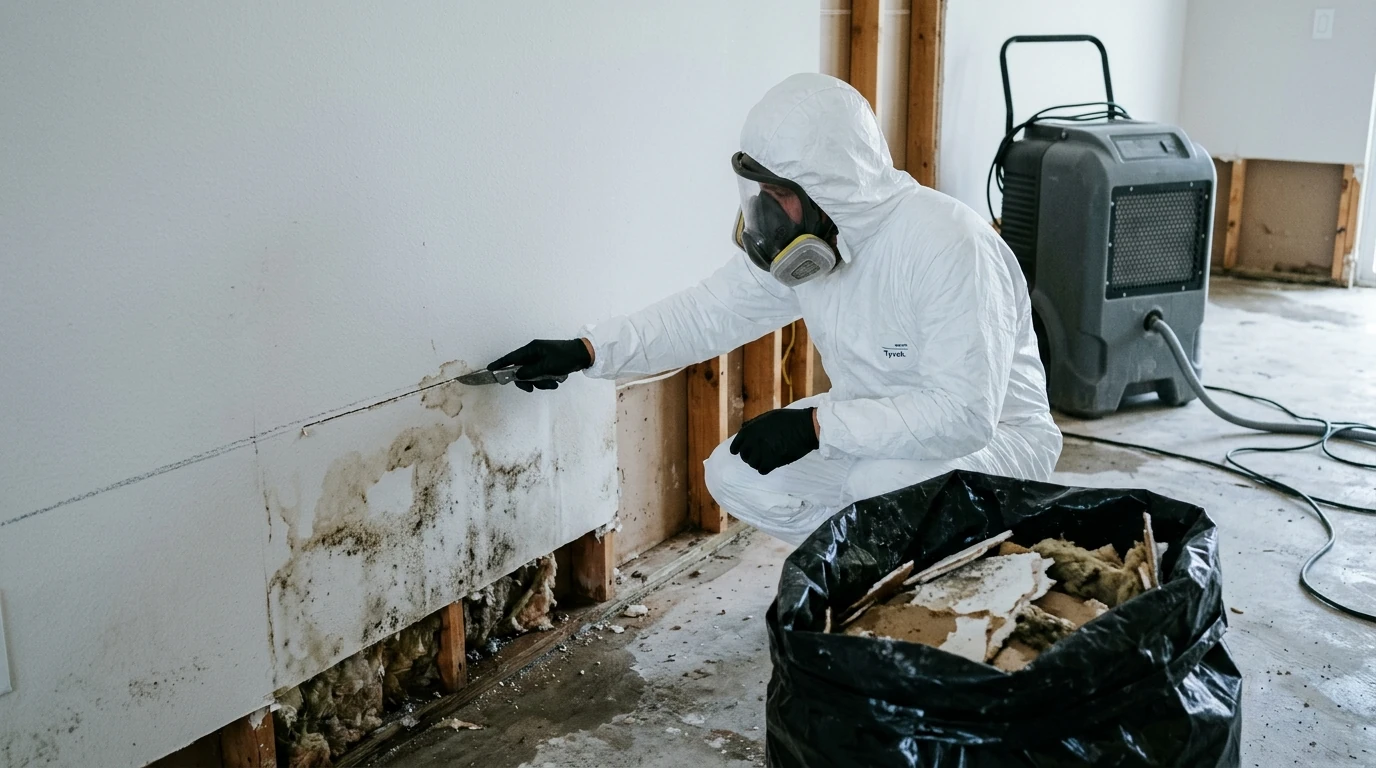
- Remove contaminated porous materials. Carpet, pad, and drywall below the flood-cut line come out and go into sealed disposal bags, not the regular trash.
- Clean and disinfect. Remaining structure and any salvageable contents are cleaned with EPA-registered antimicrobials appropriate for Category 3 water.
- Dry and verify. Air movers and dehumidifiers run until moisture meters confirm the structure is back to a dry standard, not just visually dry.
- Document for insurance. Photos, moisture logs, and an itemized invoice are compiled for your claim, whether or not the endorsement applies.
If the source is still an active leak or failed line rather than a one-time backup, that part of the job is emergency plumbing, separate from the cleanup itself.
Does a septic backup change the cleanup differently than a sewer line backup?
The interior cleanup process is the same either way, but a septic backup often adds a repair job the sewer scenario doesn’t. A sewer line backup is usually a plumbing or municipal issue; a septic backup can mean the tank or drain field itself has failed and needs a licensed septic contractor, on top of the restoration work inside.
Because a large share of homes in Thonotosassa and the surrounding unincorporated areas run on private septic, it’s worth asking early whether the backup is a one-time clog or a sign the system needs service. Restoration crews handle the water, contamination, and structural cleanup; the septic system repair itself typically falls to a septic specialist.
If you’re dealing with an active backup right now, a documented moisture assessment and a clear scope of work are what keep the cost predictable. Request a sewage cleanup assessment and get a written scope before any demolition begins.
About DRYCOR RESTORE
DRYCOR RESTORE is an IICRC Certified Firm serving Thonotosassa, FL and the greater Tampa Bay area since 2005, licensed under CBC1253966. Their crews handle sewage cleanup, water damage restoration, flood damage restoration, mold remediation, and fire and storm restoration across the region, operating 24/7. This post was prepared with the DryCor team by Robert Showalter.
Need help now? Call DRYCOR RESTORE at (813) 829-1091.