
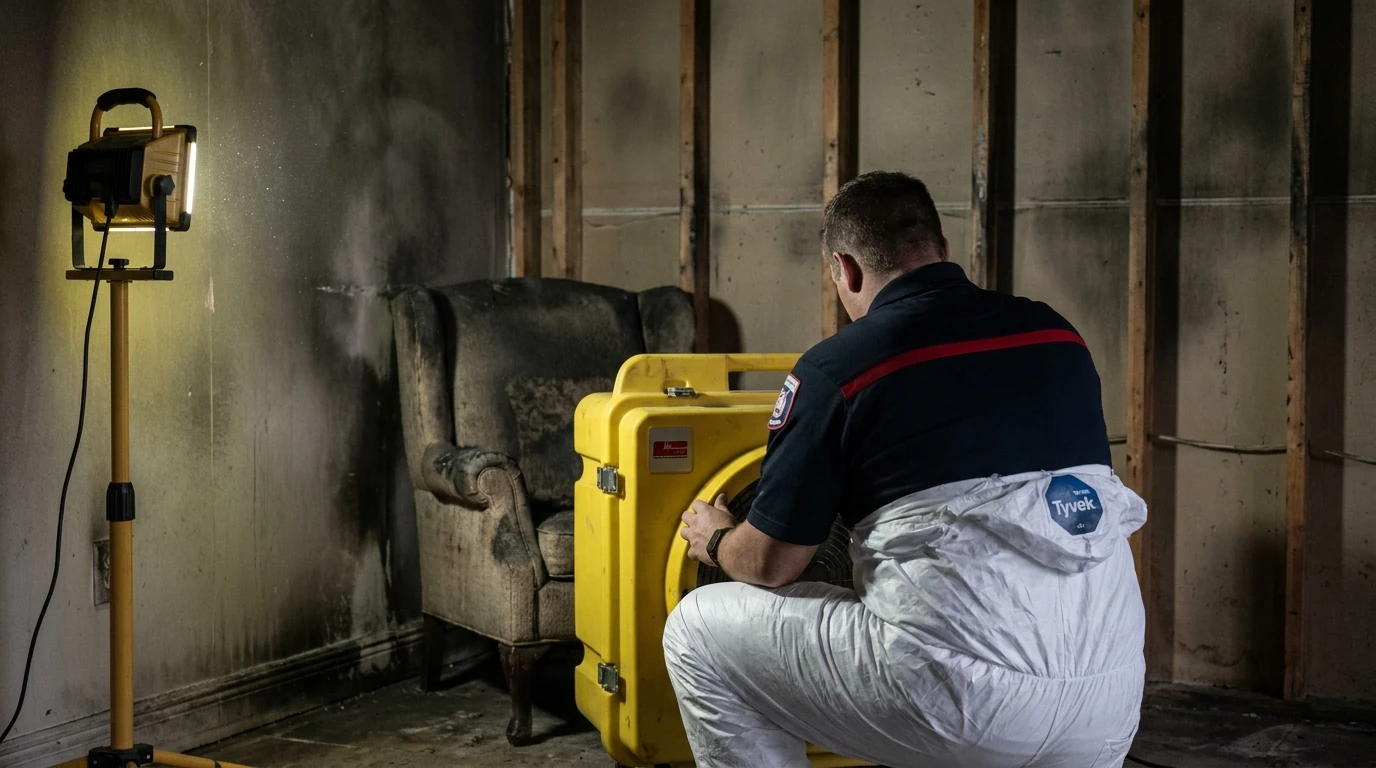
TL;DR: Fire and smoke restoration is the process of removing soot, neutralizing odor, drying out water used to fight the fire, and rebuilding what’s damaged, usually in that order. It should start within 24 to 48 hours of the fire department clearing the structure, because soot turns acidic and etches surfaces the longer it sits, and standing firefighting water can start growing mold in the same window. A full restoration typically runs from a few days for smoke-only damage to several weeks when framing and drywall need rebuilding.
If you’re standing in a kitchen with scorched cabinets, a hallway full of soot, and a fire marshal who just told you the house is safe to re-enter, the next 48 hours matter more than almost any other part of this process. Hillsborough County’s humidity doesn’t pause for insurance paperwork. Soot keeps working on your walls, flooring, and contents every hour it sits untreated, and water from the hoses that put the fire out is already soaking into subfloors and drywall. Here’s what actually happens during fire and smoke restoration, and what to do in the first two days.
What does fire and smoke restoration actually involve?
Fire and smoke restoration is a multi-stage process that separates into assessment, soot and debris removal, odor neutralization, structural drying, and rebuild. Each stage uses different equipment and has to happen in roughly that order, or you end up sealing odor and moisture behind new paint and drywall.
Assessment comes first: a technician walks the structure to classify the fire by what burned (wood, synthetic materials, grease) because that determines the type of soot and how it’s cleaned. Dry soot from a fast wood fire wipes off differently than the greasy, smearing residue from a kitchen fire or burning plastics. Getting this wrong means re-doing the cleaning pass, which costs time and money.
After soot removal, odor control follows: HEPA air scrubbers, thermal fogging, or ozone treatment (used only in unoccupied spaces, per manufacturer guidance) pull smoke particles and VOCs out of the air and porous materials. Structural drying runs in parallel if firefighting water soaked walls or flooring. The ANSI/IICRC S700 Standard for Professional Fire and Smoke Damage Restoration outlines the technical benchmarks crews work against for each of these stages.
How soon after a fire should restoration start?
Restoration should start within 24 to 48 hours of the fire department releasing the structure, before soot residue sets permanently into painted surfaces and metal fixtures start corroding. Waiting longer turns a cleaning job into a replacement job.
Soot is acidic. Within a few days it etches glass, pits chrome and brass fixtures, and yellows grout and plastics in ways that no longer come clean. Meanwhile, any water used to extinguish the fire behaves like a standard water loss: the EPA’s flooded homes cleanup guidance notes that wet building materials can begin growing mold within 24 to 48 hours, a timeline that holds true whether the water came from a burst pipe or a fire hose. Our related guide on the fire damage restoration process walks through what each of those first days looks like in more detail.
If the structure isn’t safe to enter yet, or the fire marshal has it secured, the priority shifts to protecting it from further loss. That’s where emergency board-up and tarping comes in, closing off broken windows, damaged roof sections, and exterior walls so wind, rain, and Hillsborough County’s afternoon storms don’t add water damage on top of fire damage.
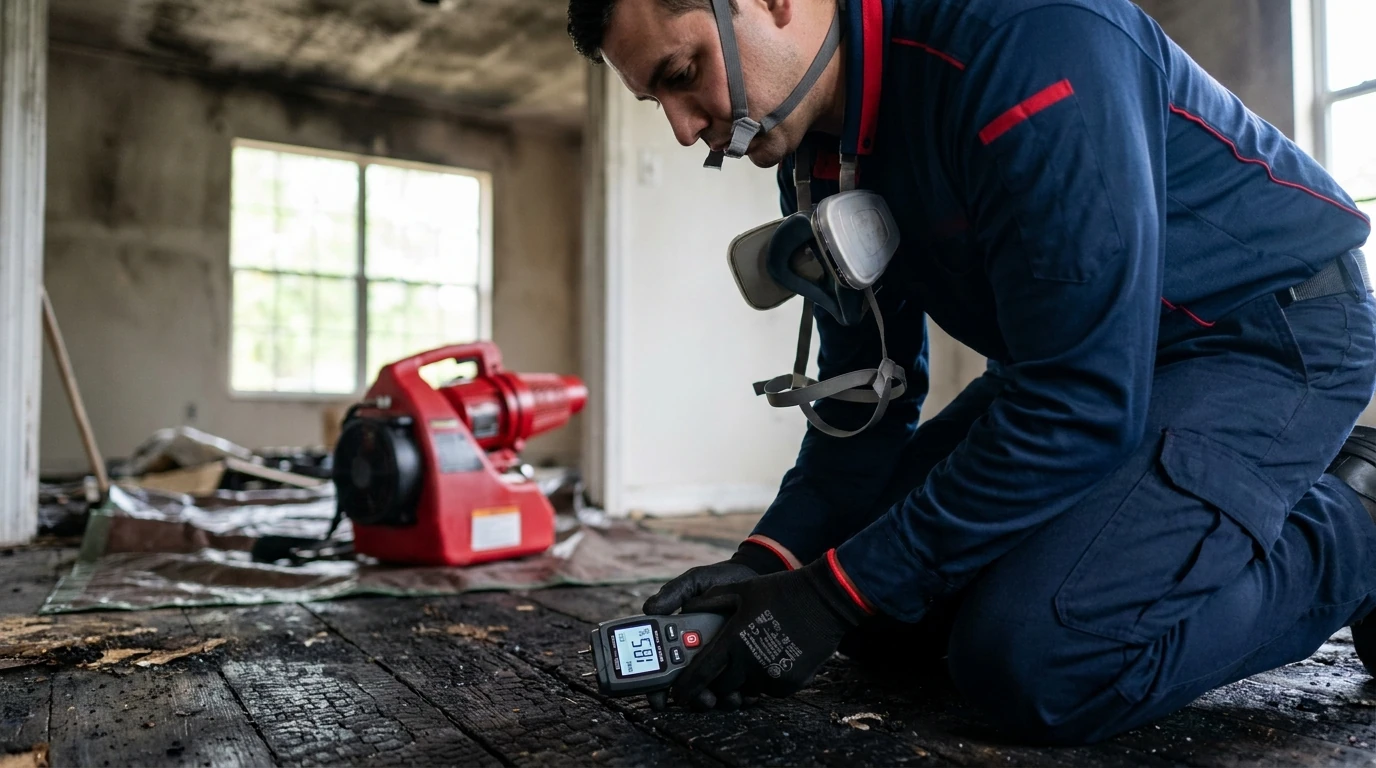
What mistakes make fire and smoke damage worse?
The single biggest mistake is cleaning soot with water or an all-purpose household cleaner before a professional assessment, which can smear dry soot into porous materials and make the stain permanent. Soot needs a dry-cleaning sponge first, then the right chemical process for the material underneath.
A few other avoidable mistakes:
- Running the HVAC system before it’s inspected. Soot and odor get pulled into ductwork and redistributed through every room the system serves.
- Opening windows and turning on fans without containment. This spreads fine soot particles into unaffected rooms instead of controlling them.
- Waiting on an insurance adjuster before starting mitigation. Most policies require the homeowner to take reasonable steps to prevent further damage; documenting the loss with photos first and then starting mitigation protects the claim rather than hurting it.
- Assuming contents are a total loss. Clothing, electronics, and furniture often respond to specialized cleaning and ozone or hydroxyl deodorization. Contents restoration and storage exists specifically because a lot of smoke-damaged belongings are salvageable.
Who should you call first after a house fire?
After the fire department clears you to re-enter, call a restoration company before you call a general contractor, because the first work that needs to happen is mitigation (securing the structure, removing soot, drying out water), not rebuilding. Starting with a contractor who isn’t set up for mitigation lets damage spread while a rebuild gets scheduled.
DRYCOR RESTORE has handled fire and smoke restoration across the Tampa Bay area since 2005 and is licensed (CBC1253966) and insured. The company is available 24/7, which matters because fire response can’t wait for business hours. A technician can assess the structure, document the damage for your insurance claim, and start the mitigation clock before soot has a chance to set permanently.
If you’re past the fire itself and dealing with the rebuild, our guide on choosing a restoration company covers what questions to ask before you sign a scope of work.
A fire doesn’t end when the flames go out. The next 48 hours determine whether your home needs a deep clean or a full rebuild, so treat that window as seriously as the fire itself.
About DRYCOR RESTORE
DRYCOR RESTORE is an IICRC Certified Firm serving Thonotosassa, FL and the greater Tampa Bay area since 2005, licensed under CBC1253966. The company’s crews handle fire damage restoration, smoke damage restoration, water damage restoration, mold remediation, storm damage restoration, and reconstruction across Hillsborough and Pinellas counties. This article was prepared with input from owner Robert Showalter.
Need help now? Call DRYCOR RESTORE at (813) 829-1091.