
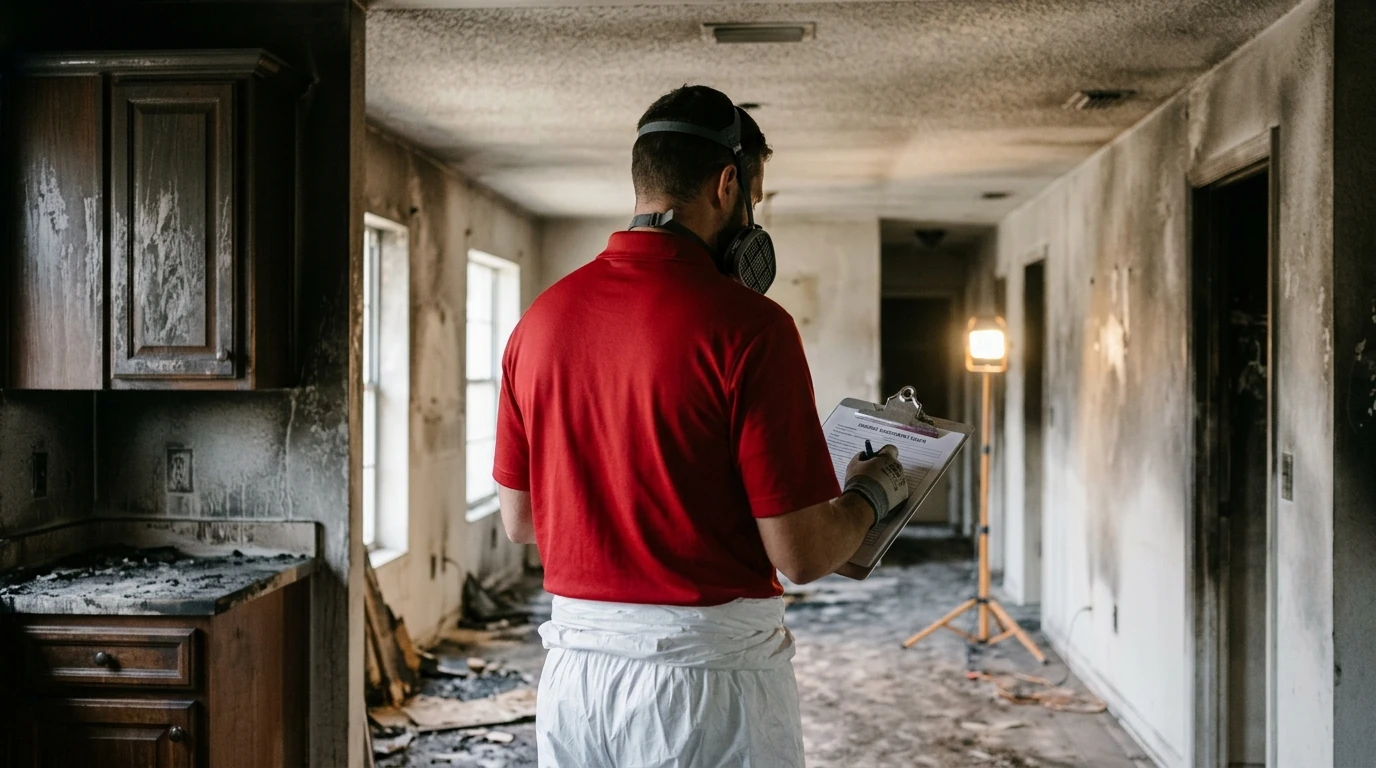
TL;DR: Fire damage restoration in the Tampa Bay area typically runs from about $2,000 for a contained, smoke-only incident to well over $60,000 for a structure fire that requires rebuilding. The biggest cost drivers are how much of the home burned, how far smoke and soot traveled through the HVAC system, and whether structural materials need to be removed and replaced rather than cleaned. Most policies cover sudden fire loss, but the final number depends on your coverage limits, your deductible, and whether smoke damage reached areas the adjuster didn’t initially scope.
If you’re standing in a kitchen with a scorched cabinet and soot on the ceiling, or you’re looking at a bedroom that burned through to the studs near Lake Thonotosassa or off US-301 toward Tampa, the number you actually care about is: what is this going to cost, and how much of it is coming out of your pocket? The honest answer is that fire damage pricing swings more than almost any other restoration category, because a grease fire that stays in one pan is a different job than a fire that pressurizes smoke into every HVAC run in the house.
How much does fire damage restoration cost in Thonotosassa, FL?
Most Tampa Bay area fire restoration jobs fall somewhere between $2,000 for a minor, contained incident and $60,000 or more for a fire that reaches structural framing and requires reconstruction. The scope, not the square footage alone, is what moves the number.
These are typical industry ranges, not quotes, because every loss is different and a written scope should come before any work starts.
| Scope of damage | Typical cost range |
|---|---|
| Smoke/soot cleaning only, single room | $2,000 - $5,000 |
| Contents cleaning and odor treatment only | $1,500 - $4,000 |
| Single room with structural damage (drywall, framing) | $10,000 - $25,000 |
| Moderate whole-house smoke and partial structural loss | $30,000 - $60,000 |
| Severe or total loss requiring full reconstruction | $60,000 - $150,000+ |
| Debris removal and demolition | roughly $2 - $7 per square foot |
Industry estimates for combined mitigation and cleaning typically run $3 to $8 per square foot, climbing well past that once reconstruction, not just cleanup, is part of the job.
What actually drives the price up or down?
The size of the fire matters less than how far smoke traveled and what kind of fuel burned. Three identical-looking kitchen fires can price out very differently once you know what was burning and where the smoke ended up.
Smoke penetration. Smoke doesn’t stay in the room of origin. It travels through return-air ducts and settles into insulation, carpet padding, and wall cavities. A fire confined to one cabinet can still leave soot residue three rooms away, which turns a cleaning job into a full HVAC decontamination.
What burned. A protein fire (grease, food) leaves a greasy, hard-to-remove residue that costs more to clean than a paper or wood fire. Synthetic materials like carpet or foam furniture produce denser smoke and more acidic soot, which etches metal and glass faster the longer it sits.
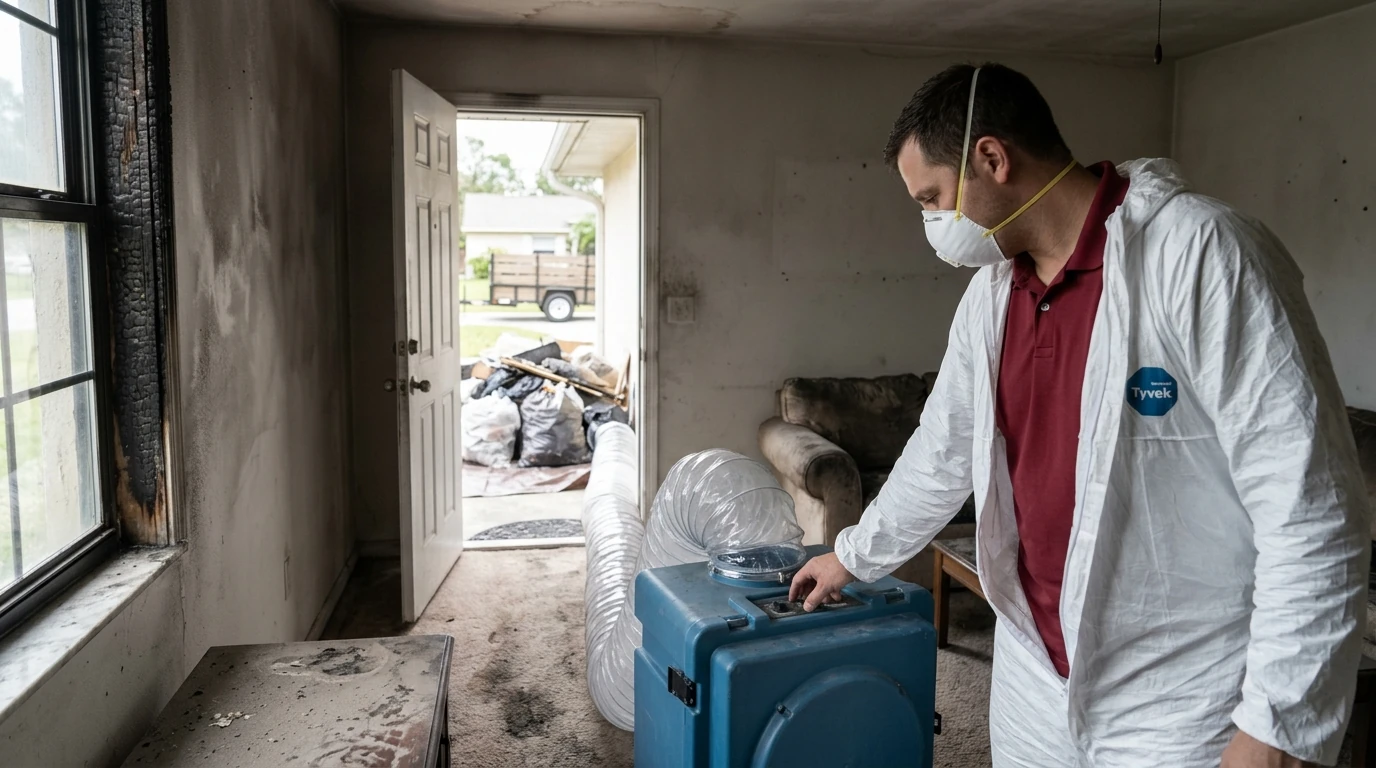
Water from suppression. Sprinklers and fire hoses often leave as much damage as the fire itself. A fire loss with significant water intrusion gets treated under the IICRC S700 fire and smoke restoration standard alongside water mitigation protocols, which adds drying equipment and time to the job.
Age and construction of the home. Many homes in Thonotosassa, Plant City, and the surrounding Hillsborough County communities are older ranch-style builds with plaster or original lath walls, which behave differently under heat than newer drywall construction and sometimes require more careful removal.
Debris removal and board-up. Before restoration starts, the structure usually needs emergency board-up or tarping to secure it against weather and theft. That line item is separate from the restoration estimate but shows up on most invoices.
What does insurance typically pay for, and what’s out of pocket?
Most standard homeowners policies cover sudden, accidental fire damage, including the structure, contents, and often temporary living expenses while the home is unlivable. What’s out of pocket is usually your deductible plus anything above your policy’s coverage limits.
Fire is one of the more reliably covered perils under a standard policy, unlike flood or gradual water damage, which typically need separate coverage. According to the Insurance Information Institute, fire and smoke damage are generally included in standard homeowners and renters policies. What varies by carrier and policy is the cap on smoke-only claims, the depreciation schedule used for contents (actual cash value versus replacement cost), and whether code-upgrade costs are covered if the rebuild has to meet current Florida Building Code.
The documentation matters as much as the coverage itself. An adjuster working from a vague estimate will often undervalue a claim. A detailed scope, with room-by-room photos, moisture readings where applicable, and an itemized contents inventory, gives the adjuster less room to push back. Our fire damage restoration process guide walks through what that documentation phase actually looks like.
What should you do first after a fire?
Secure the structure and get a written inspection before you sign anything or start cleaning on your own. DIY smoke cleaning with household products often smears soot deeper into porous materials and makes the professional job harder, not easier.
The first 24 to 48 hours matter. Acidic soot residue continues to etch metal, grout, and finishes the longer it sits, and standing water from fire suppression can start supporting mold growth within a day or two, per EPA guidance on mold and moisture. Before you touch anything beyond opening windows for ventilation, get a licensed restoration company out to document the loss and provide a written scope your adjuster can work from.
A company like DRYCOR RESTORE, an IICRC Certified Firm licensed in Florida (CBC1253966), can inspect the property, photograph the damage room by room, and put together a scope that separates mitigation from reconstruction, which matters because insurers often process those as two different claim phases. Request a fire damage inspection before any cleanup starts so the documentation reflects the loss as it actually happened.
Once the structure is secured and the scope is written, rebuild work (framing, drywall, cabinetry) is typically handled as a general contracting phase separate from the initial mitigation.
About DRYCOR RESTORE
The company is an IICRC Certified Firm serving Thonotosassa, Tampa, Brandon, Plant City, and the surrounding Tampa Bay area since 2005, holding Florida contractor license CBC1253966. Its crews handle fire and smoke damage restoration, general contracting and reconstruction, water and flood mitigation, mold remediation, and related emergency services across the region, with 24/7 response and a 4.9 Google rating as of this writing.
Need help now? Call DRYCOR RESTORE at (813) 829-1091.