
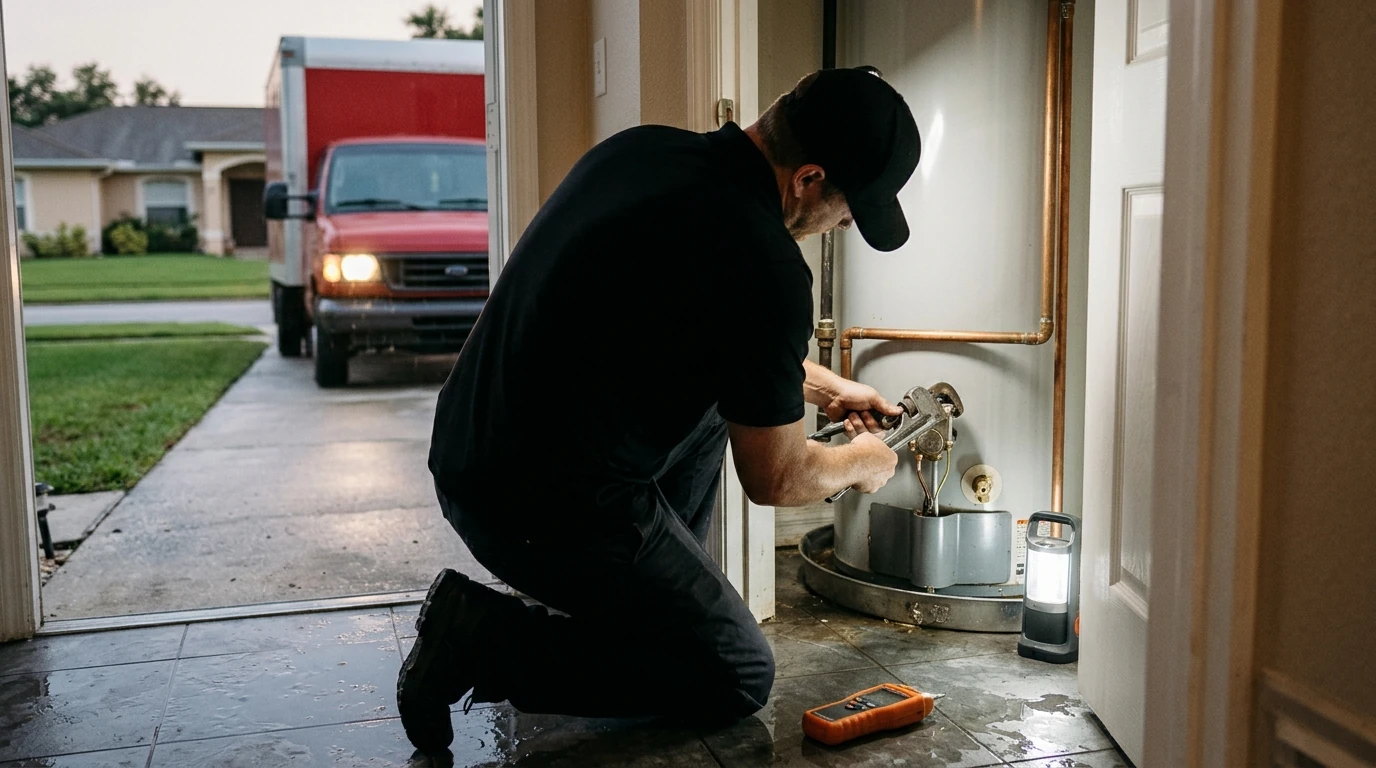
TL;DR: If a pipe bursts in your Thonotosassa home, shut off the main water valve and the breaker to any flooded outlets first. Then call a licensed plumber to stop the leak at its source, and call a water damage restoration company the same hour to start extraction and drying. Both calls matter: a stopped leak with no drying still leads to warped floors and mold within 24 to 48 hours.
Water is spreading across your floor right now, or you just found a soaked ceiling and a pipe that let go behind the wall. In Thonotosassa’s mix of slab-on-grade ranch homes and newer construction near Lake Thonotosassa, a burst supply line can push dozens of gallons an hour into drywall and subfloor before anyone notices. You don’t need a long explanation. You need to know what to do in the next minute and who to call in the next hour.
What do you do in the first 60 seconds after a pipe bursts?
Shut off the water at the main shutoff valve, not just the fixture, since a burst pipe usually isn’t isolated to one valve. If water is near outlets, switches, or a breaker panel, shut off power to that area at the main panel before you walk through standing water.
After that: move furniture, rugs, and electronics off the wet floor if it’s safe to do so. Take photos or a short video of the water and the source before you touch anything. Don’t run a wet-dry vac on standing water near an energized outlet, and don’t wait to see if it dries on its own. Cat 1 clean water from a supply line degrades fast once it sits on drywall, carpet pad, and subfloor.
Who do you call first, a plumber or a restoration company?
Call both, within the same hour if you can, because they do two different jobs. A licensed plumber stops the water at its source: they’ll find the break, cut out the damaged section of pipe, and repipe or patch it. A restoration company removes the water that already got into your home and starts the drying process, which has to begin within hours to limit damage and prevent mold growth, as outlined in the ANSI/IICRC S500 water damage standard.
If you’re not sure who to call first, call the plumber the moment you’ve shut off the water, since the leak needs to stop before extraction makes sense. Then call a restoration crew. For the extraction and drying side, DRYCOR RESTORE answers 24/7 at (813) 829-1091 and can get equipment on-site to start pulling water before it travels further into walls and subfloor. If you want the plumbing side lined up first, our emergency plumbing post walks through what to expect from that call.
What happens in the first 24 hours after a burst pipe?
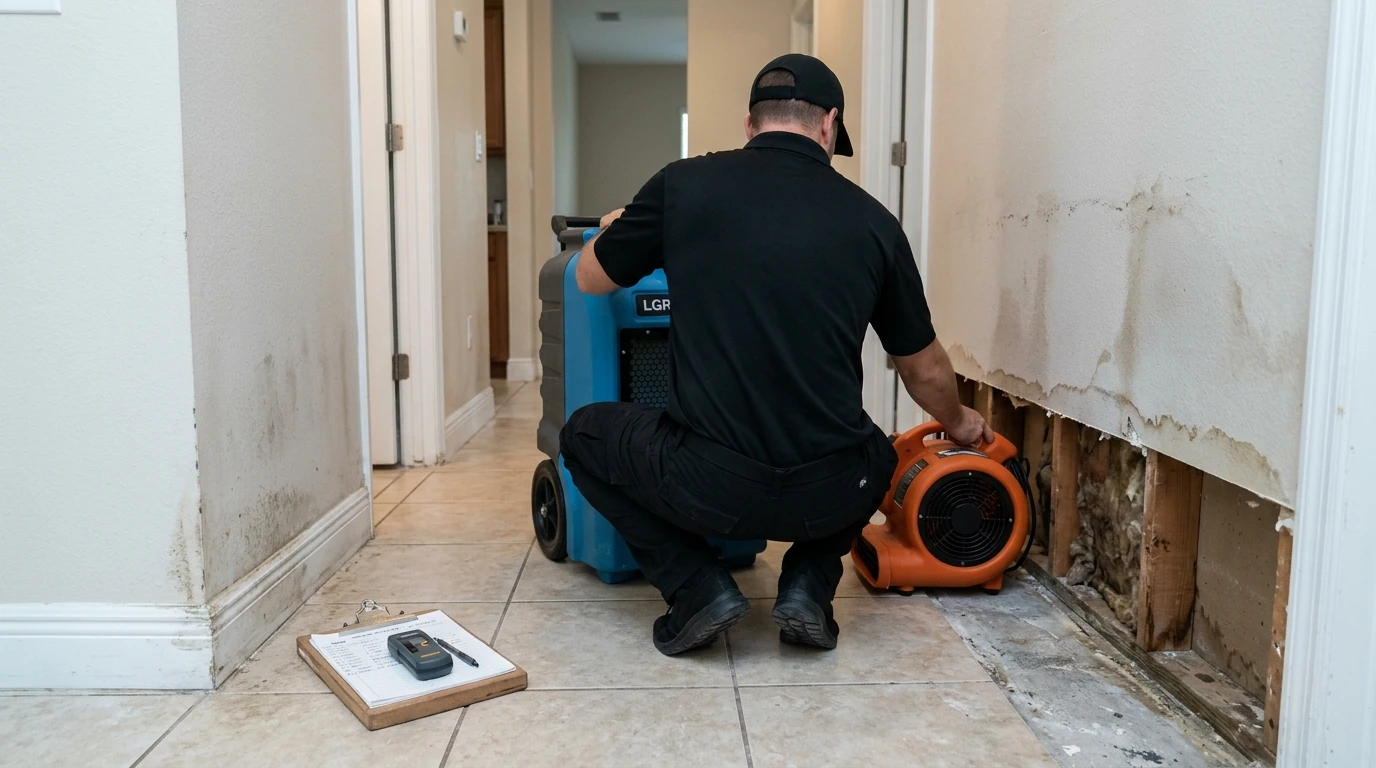
The first 24 hours are about stopping further damage, not finishing the job. A restoration crew’s first visit typically includes extracting standing water, checking moisture levels behind drywall and under flooring with a moisture meter, and setting air movers and a dehumidifier to begin drying affected materials.
Expect the crew to document everything with photos and moisture readings before removing any wet drywall or flooring. That documentation protects your insurance claim later. Drying usually runs 3 to 5 days with equipment left running continuously, with follow-up moisture checks to confirm materials have returned to a normal reading before equipment comes out. Our first-24-hours checklist covers the full timeline if you want more detail.
Will homeowners insurance cover a burst pipe in Thonotosassa?
Most homeowners policies cover sudden, accidental water damage from a burst pipe, since that’s different from a slow leak caused by wear and neglect. Coverage depends on your specific policy language, so check it before assuming.
What insurers generally look for: proof the damage was sudden rather than gradual, and proof you acted to limit further damage once you found it, a duty most policies spell out explicitly (see the Insurance Information Institute’s guide to what’s covered by a standard homeowners policy). Keep your photos, the plumber’s invoice showing the repair date, and the restoration company’s drying logs and moisture readings. Our plain-English insurance guide breaks down what’s typically covered and what isn’t for water losses like this one.
Once the water’s stopped and the drying equipment is running, the rest of the process is paperwork and patience. Document everything, keep receipts, and don’t sign anything from an adjuster until you’ve confirmed the scope matches what actually happened in your home.
About DRYCOR RESTORE
DRYCOR RESTORE is an IICRC Certified Firm serving Thonotosassa, FL since 2005, holding Florida license CBC1253966. Robert Showalter and the crew handle water damage restoration, burst pipe cleanup, and related mitigation work across the Tampa Bay area, with 24/7 phone availability for active water emergencies.