TL;DR: Board-up and tarping services seal broken windows, doors, and roof openings with exterior-grade plywood and reinforced poly tarping, usually within hours of a loss, to stop wind-driven rain, pests, and trespassers from reaching the interior. In Lakeland, FL, this step typically happens before permanent repairs are scheduled and is often required by your insurance policy’s duty to mitigate further damage. Photos and documentation taken during this step support the claim that follows.
If a tree just came through your roof in the last hour, or a Polk County hailstorm shattered your sliding glass doors, you don’t have time to research contractors. You need the opening sealed before the next afternoon storm cell rolls through, whether your property sits near the bungalows around Lake Hollingsworth or a commercial strip off US-98. Board-up and tarping is the first physical step in almost every storm or fire restoration job, and getting it done right affects both the safety of the structure and how smoothly your insurance claim moves.
What Does a Board-Up and Tarping Service Actually Do?
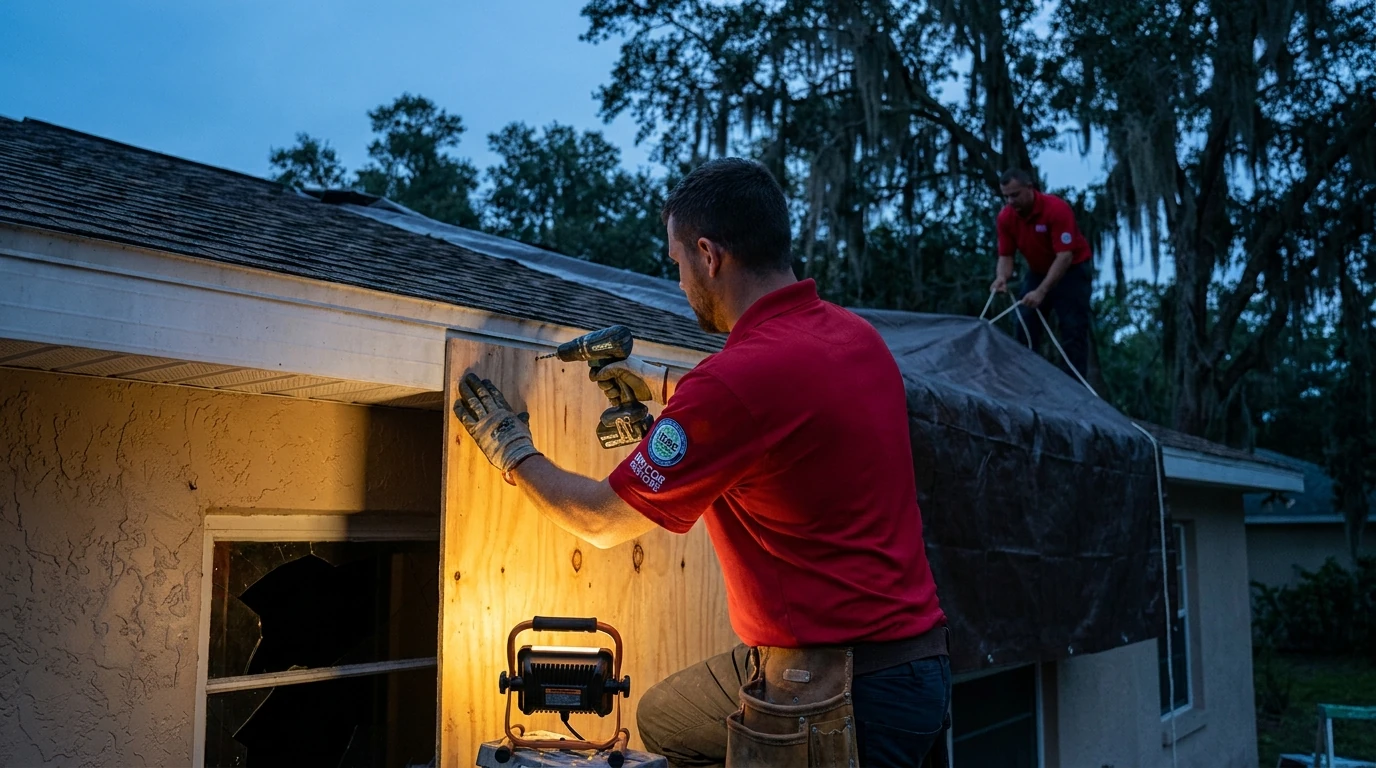
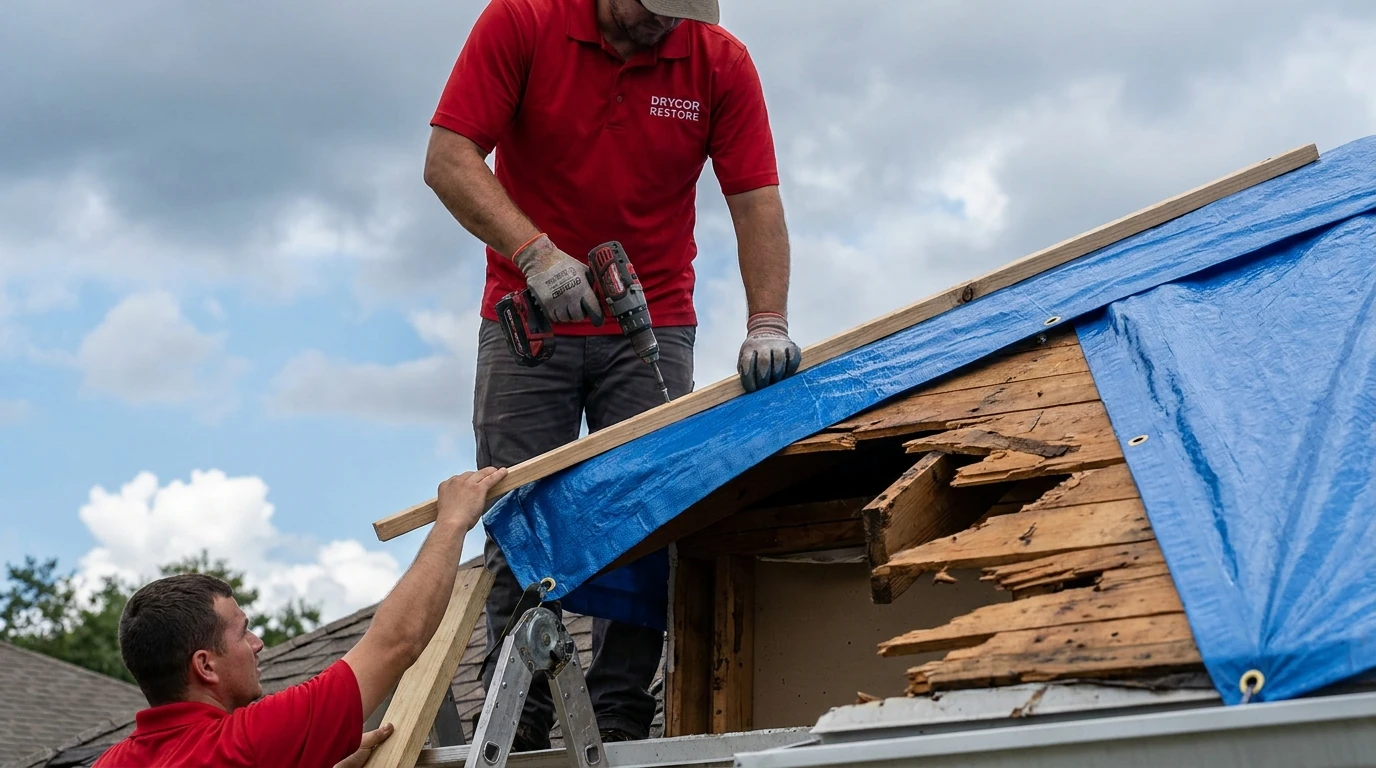
A board-up and tarping service seals broken windows, doors, and roof openings with exterior-grade plywood and reinforced poly tarping to stop wind-driven rain, pests, and trespassers from reaching the interior while permanent repairs get scheduled.
For openings at ground level, that usually means 1/2-inch or 5/8-inch CDX plywood cut to fit and screwed (not nailed) directly into the framing, not just the trim, so it holds through wind gusts. For roof damage, crews use heavy-gauge poly tarping rated for extended UV and rain exposure, secured with furring strips and screws at the perimeter rather than staples or tape, which fail fast in Florida humidity and sun.
A thorough crew also photographs every opening before and after boarding, which becomes part of the documentation your insurance adjuster will ask for. This is also the point where a contractor can flag secondary risk, like a soaked ceiling that’s about to sag, before it becomes a bigger job. If water has already reached drywall or insulation, that typically moves into a separate water damage restoration scope.
How Fast Should Board-Up and Tarping Happen After Storm or Fire Damage?
Board-up and tarping should happen as soon as it is safe to access the property, generally within a few hours of the damage occurring, because every hour an opening sits exposed increases the risk of secondary water damage and mold growth.
The IICRC, the industry body behind the S500 water damage standard, treats rapid response as the single biggest factor in whether a loss stays a repair or becomes a full reconstruction. A boarded window that sits open overnight during a Central Florida thunderstorm can turn a $400 glass repair into a five-figure drywall and mold job. DRYCOR RESTORE answers calls 24/7, which matters most for storm damage that hits after business hours, which is common with Florida’s afternoon and evening storm patterns.
For fire damage specifically, board-up often happens the same day the fire department releases the scene, before soot and standing water from suppression efforts sit any longer than necessary. That timing overlaps directly with the early steps described in our fire damage restoration process guide.
Will Homeowners Insurance Cover Emergency Board-Up and Tarping in Lakeland?
Most Florida homeowners and commercial property policies include a duty-to-mitigate clause, which typically covers reasonable temporary repairs like board-up and tarping, since insurers would rather pay for a tarp now than a collapsed ceiling later.
That said, coverage specifics vary by carrier and policy language, so keep every receipt and photo from the board-up step. DRYCOR RESTORE is a Managed Repair Preferred Vendor for 34 insurance carriers in Florida, which means our documentation is built to match what adjusters already expect to see on a claim file. If you’re still working through what your policy actually covers on the water damage side of a loss, our breakdown on whether homeowners insurance covers water damage walks through the common exclusions and what typically gets approved.
For broader guidance on protecting a property before and after a declared storm event, FEMA publishes general post-disaster property protection guidance that most Florida insurers reference when evaluating mitigation claims.
What Should You Do Before the Board-Up Crew Arrives?
Before a crew arrives, photograph every damaged opening from inside and outside, shut off electrical circuits to any wet area, and move valuables and electronics away from exposed windows or roof damage.
A few other things help the process move faster:
- Don’t climb onto a damaged roof yourself. Compromised decking and wet shingles are a serious fall risk, even for a quick look.
- Note the time you discovered the damage. Insurers often ask when the loss occurred versus when mitigation started.
- If the damage came from a storm event, keep an eye on local weather tracking from NOAA so you know whether a second system is expected before permanent repairs can be scheduled.
- Don’t throw away damaged materials until the adjuster has had a chance to review them, unless they pose a safety hazard.
If the loss also involves interior flooding from the same event, that typically needs a separate emergency water removal call alongside the board-up.
A boarded-up or tarped property is not a finished repair, it’s a hold. Once the structure is secure, the next conversation is usually about scope: what gets rebuilt, what your policy covers, and how fast reconstruction can start. Call DRYCOR RESTORE at (813) 829-1091 to get a crew out to a Lakeland property the same day whenever conditions allow.
About DRYCOR RESTORE
DRYCOR RESTORE is an IICRC Certified Firm serving Thonotosassa, Lakeland, and the greater Tampa Bay region since 2005, operating under Florida Certified Building Contractor license CBC1253966. The team holds IICRC Water Restoration Technician (WRT) certification and EPA Lead-Safe certification, and works as a Managed Repair Preferred Vendor for 34 insurance carriers in Florida. This post was prepared with the DRYCOR RESTORE team by Robert Showalter.